A little water sitting in the bottom of a sump pit worries a lot of homeowners, and usually it should not. Some standing water below the point where the pump switches on is normal for many systems. What matters is not the presence of water but its behavior: whether the pump activates at the right level, clears it, and stops before anything overflows, and whether any water is reaching the floor.
Some standing water in a sump pit is normal, typically water sitting below the level where the float switches the pump on. The important questions are whether the pump activates at its intended level, removes the water, and shuts off before the basin overflows. Water sitting unusually high with no pump activity, constant short-cycling, or any water on the basement floor around the pit are the signs worth investigating.
| What you see | What it usually means |
|---|---|
| Water below the switch-on level | Often normal for the system |
| Water rises to the switch-on point, then is pumped out | A normal pumping cycle |
| Water high and not being pumped | Possible power, float or pump fault |
| Water near or over the basin rim | Overflow risk, investigate |
| Pump cycles every few seconds | Possible check-valve drain-back or high inflow |
| Water on the floor around the pit | Not normal pit water, a water-intrusion concern |
A sump pump switches on when the float rises to a set level and off when it drops to a lower one. The water you see resting in the pit is usually below the switch-on level, waiting for the next cycle. Problems show up as behavior: the float that never triggers the pump (water keeps rising), or the float that drains back and retriggers instantly (short-cycling). A float obstructed by a pipe or the pump cord is a common, fixable cause of trouble.
A pump that runs every few seconds is either seeing genuinely high inflow or, very often, suffering from a failed check valve that lets the water it just pumped drain straight back into the pit. Short-cycling wears the pump out and, during a storm, can mean it never gets ahead of the water. This overlaps with why a basement floods with the pump running.
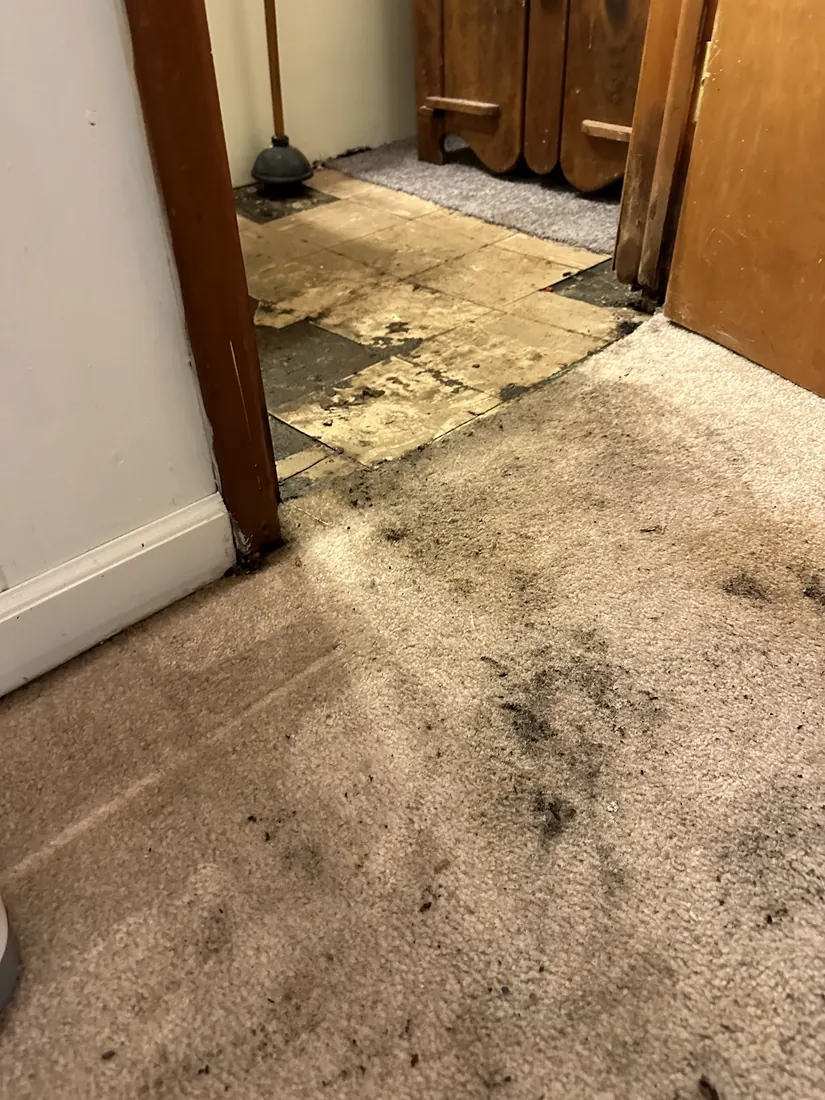
Water inside the pit, even a fair amount, is one thing. Water around the pit on the basement floor is another entirely: that is water intrusion, and it is the point where a maintenance question becomes a potential flood. If water is escaping onto finished materials, the priority shifts from pit levels to checking what is wet and, if materials are affected, restoration. For keeping the system healthy, see cleaning the pump and preventing another flood.
There is no one correct inch of water that applies to every pit. Float settings, pump design and the drainage feeding the basin all differ, so a depth that is perfectly normal for one system would be a warning sign in another. Judge by behavior, does it activate, clear and stop correctly, rather than by a number copied from an online article.
This guide is general information for US homeowners, not a property-specific diagnosis, a pump-repair manual, a structural or electrical assessment, or insurance advice. Water category, salvage, drying time, cost and coverage depend on your specific situation and policy. MH Restoration provides cleanup and water damage restoration; pump, plumbing, electrical and drainage repairs are separate trades.
Tell us your city, water depth, and whether water is still coming in. We'll walk you through safe next steps and check cleanup availability in your area.
☎ (877) 919-1672 Request Basement Flood Cleanup