Contents Pack-Out and Storage After Sump Pump Flooding
Sometimes the fastest way to restore a flooded basement, and protect what is in it, is to move the contents out. A pack-out inventories your belongings, packs and relocates them to off-site storage while the basement is dried and rebuilt, then returns them. It clears the space to work and gets salvageable items out of the damp environment before they take on more damage.
Extensive reconstruction where contents would otherwise be exposed to dust and work.
A pack-out clears and protects the space so drying and reconstruction can proceed efficiently.
Inventory, Pack, Store, Return
Inventory. Everything is logged and photographed, which doubles as claim documentation.
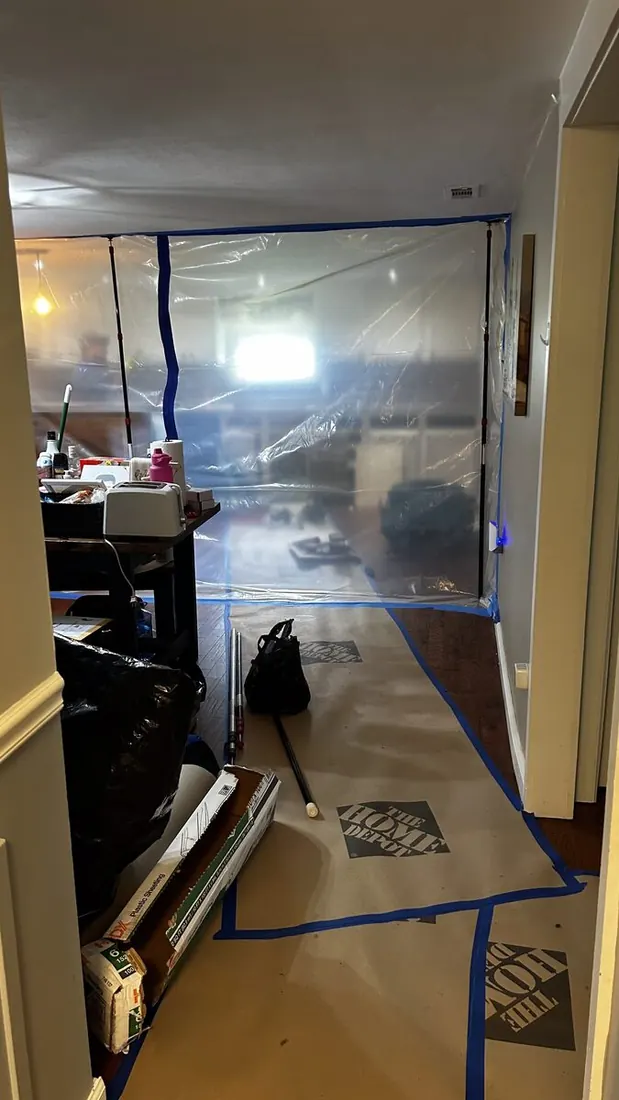
Pack and relocate. Items are packed and moved out of the work area along protected pathways.
Store. Belongings are kept in appropriate off-site storage while work proceeds.
Clean and restore. Salvageable items are cleaned and dried; unsalvageable ones are documented.
Return. Contents come back once the basement is dry and rebuilt.
Why the Inventory Matters as Much as the Move
The documented inventory a pack-out creates is not just logistics; it is some of the most useful evidence you will have for the contents side of your insurance claim. Photographs and a written list of condition, created before anything is moved, mean you are not trying to remember weeks later what was in those boxes. For a large loss, that record can be worth as much as the move itself.
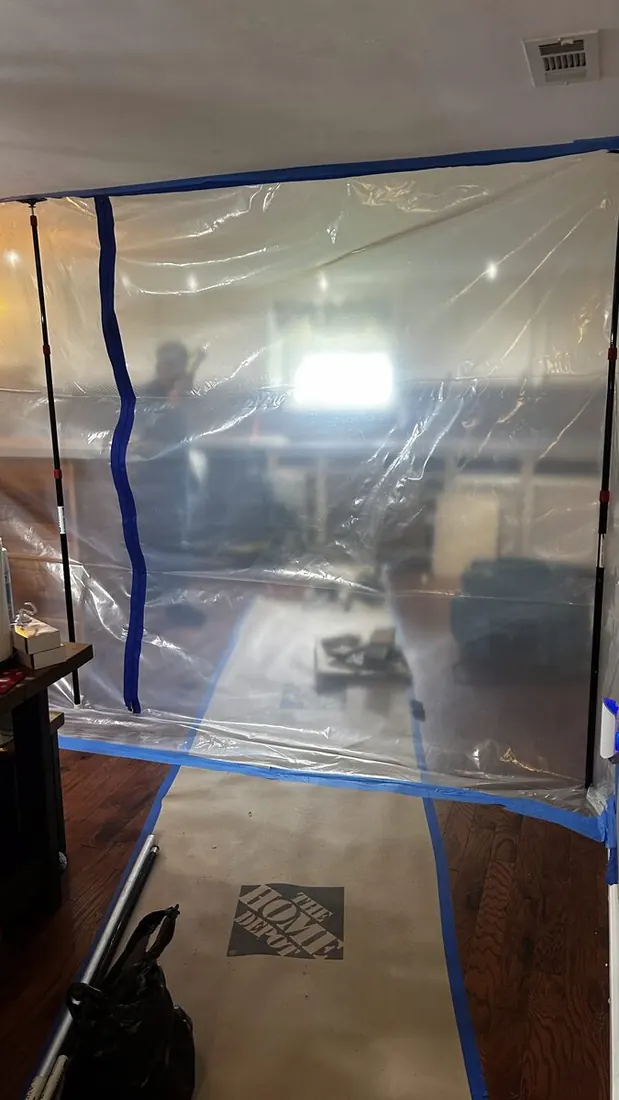
Protected pathways keep belongings and the rest of the home clean while contents are moved out.
Pack-Out vs. Contents Restoration
These two services overlap but are not the same. Contents restoration is the cleaning, drying and salvage of your belongings. Pack-out is the logistics, inventorying, moving and storing them. A job may need one or both; the inventory created during pack-out is also what supports the contents side of your insurance claim. Together they protect both the items and your ability to be made whole.
An Illustrative Pack-Out Job
Consider a finished basement used as a family room and storage, flooded badly enough to need extensive drywall and flooring work. Rather than work around the furniture and boxes, the crew inventories and photographs everything, packs it along protected pathways, and moves it to off-site storage. Salvageable items are cleaned; a few unsalvageable ones are documented for the claim. When the basement is dried and rebuilt, the contents come back to a finished space. This is a representative example, not a specific completed project.
It is the process of inventorying, packing and relocating your belongings to off-site storage while the basement is dried and restored, then returning them. It clears the work area, protects salvageable items from the damp environment, and creates a documented inventory for your claim.
Will my belongings be documented for insurance?
Yes. A pack-out begins with an inventory and photographs of your contents, which is exactly the documentation insurers want for the contents portion of a loss, both for what is being restored and for anything that cannot be saved.
Do all my things have to leave the house?
No, only what needs to, based on the size of the job and the condition of the items. Some restorations are done with contents protected in place; larger or more damaged situations benefit from moving belongings out so the space can be dried and rebuilt efficiently.
Where are my belongings stored?
In appropriate off-site storage while the basement is dried and rebuilt. The inventory tracks what went out so everything is accounted for and returned when the space is finished.
How is a pack-out different from contents restoration?
Pack-out is the logistics, inventorying, packing, moving and storing. Contents restoration is the cleaning, drying and salvage of the items themselves. A job may use one or both, and together they protect your belongings and your claim.
What happens to items that can't be saved?
They are documented with photos and condition notes for your claim, then disposed of appropriately. Capturing that evidence before disposal is important, which is one reason the inventory is done up front.
Basement Flooded After a Sump Pump Failure?
Tell us your city, water depth, and whether water is still coming in. We'll walk you through safe next steps and check cleanup availability in your area.