A basement floor can look and feel dry while the drywall, subfloor and wall cavities behind it are still soaked. Moisture detection after a sump pump failure is how we find that hidden water, with meters, thermal imaging and documented readings, so nothing gets sealed up wet. It is the quiet, technical service that turns guesswork into evidence, and it protects both your basement and your insurance claim.
Sump pump flood moisture inspection establishes the true extent of a loss: which rooms and materials got wet, whether water is trapped beneath flooring, whether baseboards and wall cavities need opening, and whether materials have reached drying goals. Water does not stay where you can see it. It wicks up drywall, travels under flooring, and pools in wall cavities, often leaving the visible surface looking perfectly normal.
Detection matters at two moments: at the start, to scope the job accurately and avoid both over-demolition and missed wet pockets, and at the end, to verify that drying is genuinely complete before anything is closed up. Both moments protect you.
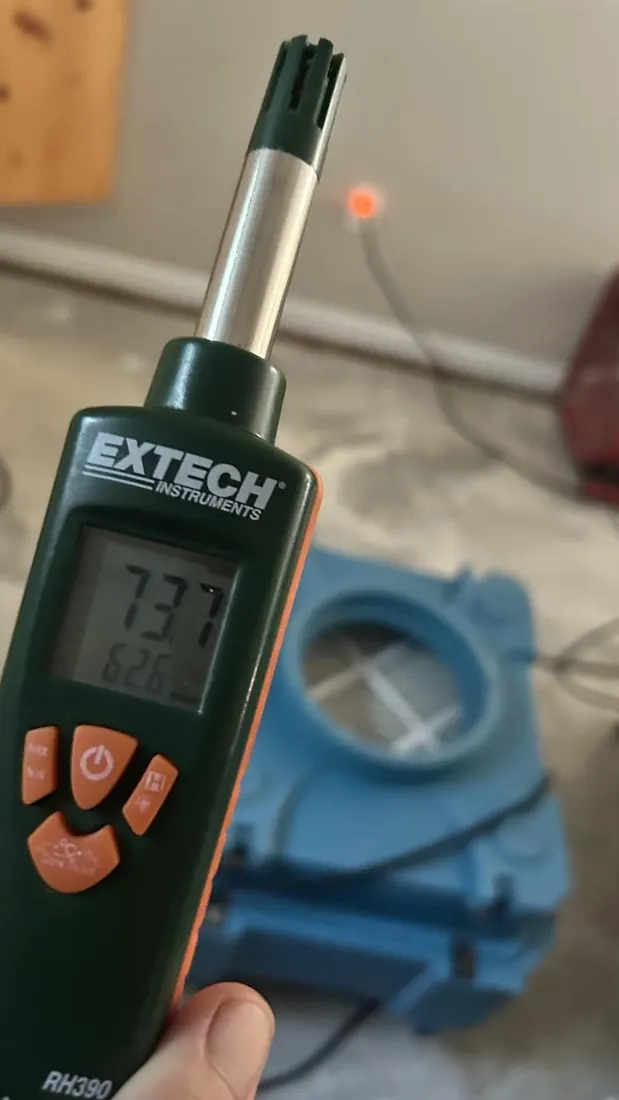
| Instrument | What it measures |
|---|---|
| Pin moisture meter | Direct moisture content by penetrating the material with small probes. |
| Pinless (non-invasive) meter | Moisture beneath a surface without leaving holes, useful for finished materials. |
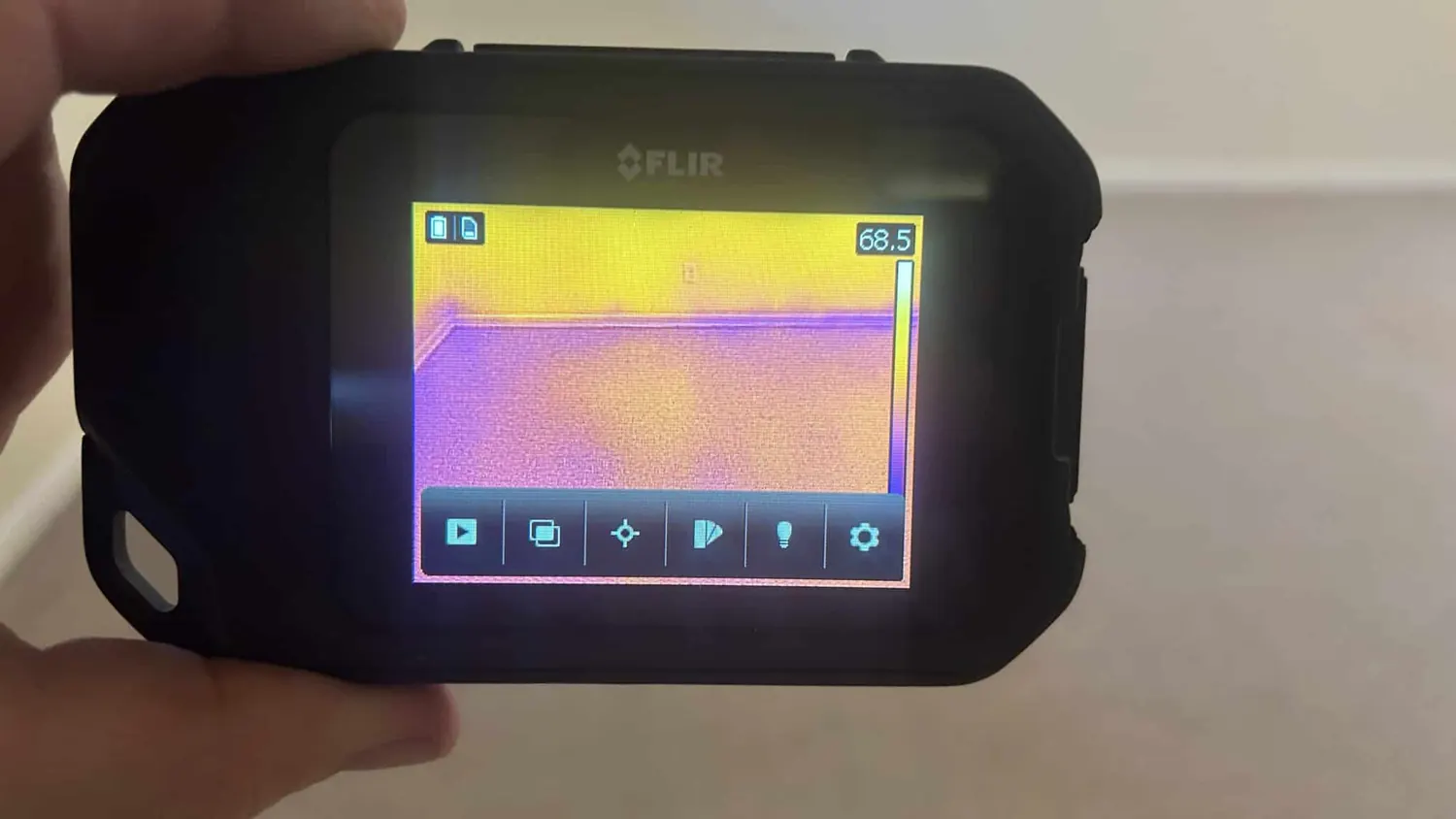
| Thermal imaging camera | Temperature differences that suggest where moisture may be, as a screening tool. |
| Hygrometer / thermo-hygrometer | Air temperature and relative humidity, used to track the drying environment. |
Thermal imaging is powerful but widely misunderstood. It shows cool patterns that suggest moisture; it does not see water or mold directly. Every suspect area a thermal camera flags is confirmed with a meter reading before any decision is made, which keeps the assessment honest.
We map the affected areas and record readings at fixed points so drying can be measured against a dry standard, typically unaffected materials of the same type elsewhere in the home. Those readings become a daily log that shows the trend. How do you know when a basement is dry enough to rebuild? When documented readings on the affected materials match the dry standard, not when the surface looks fine or the musty smell fades. This is the objective evidence that both guides the work and supports your claim.
Imagine a homeowner whose basement was pumped out and left to air for several days, who calls because of a faint musty smell. On inspection, the open floor reads dry, but a pinless meter along one wall shows elevated moisture a foot up the drywall, and the thermal camera shows a matching cool band. A pin reading confirms the wall cavity is still wet behind intact-looking drywall, which is exactly where the smell is coming from. That finding changes the plan from 'nearly done' to 'open and dry this wall properly.' This is a representative example of why detection matters, not a specific completed project.
Moisture detection underpins almost every other service. It scopes material removal, verifies structural drying, confirms whether a floor is trapping water, and often precedes mold remediation. It is also what tells you a basement is finally ready for reconstruction.
Basement flood recovery usually takes several of these working together.
Tell us your city, water depth, and whether water is still coming in. We'll walk you through safe next steps and check cleanup availability in your area.
☎ (877) 919-1672 Request Basement Flood Cleanup