Hard flooring behaves very differently from carpet in a flood. Luxury vinyl plank, laminate, engineered wood and tile each react to water in their own way, and waterproof on the box rarely means dry underneath. Flooring restoration is about getting those material-specific decisions right, so you neither replace a floor that could have dried nor save one that is quietly trapping moisture against the subfloor.
| Flooring | What water does to it |
|---|---|
| Laminate | Core swells and crumbles; edges lift. Once swollen, usually not salvageable. |
| Luxury vinyl plank (LVP) | Surface resists water, but it gets under at seams and edges and sits on the subfloor. |
| Engineered wood | Can cup, swell and delaminate depending on exposure and the subfloor beneath. |
| Solid hardwood | Cups and swells; sometimes recoverable with slow, controlled drying if caught early. |
| Tile | Often survives, but water travels through grout and under it to the subfloor. |
Sump pump flood damaged flooring restoration separates the finish, the floor you see, from the subfloor underneath, because a floor can look fine while the assembly below stays wet.
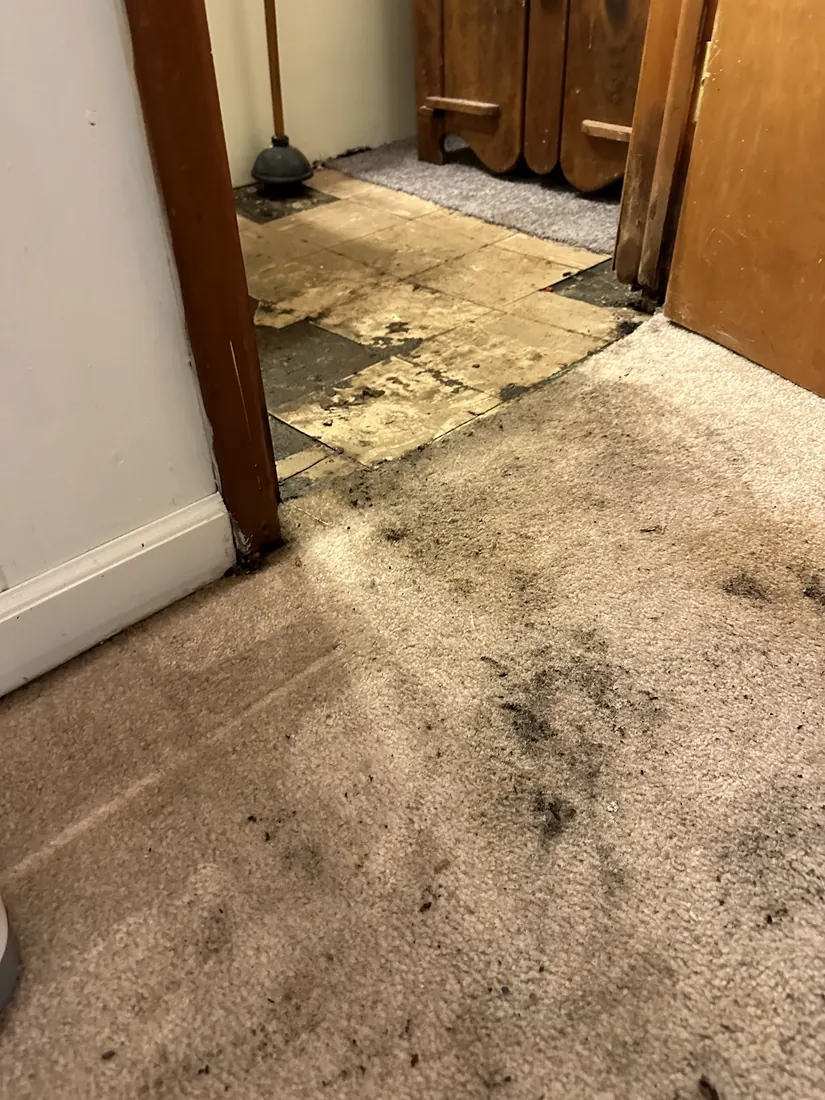
Can waterproof vinyl trap water? Yes, and this is the mistake that causes mold weeks later. Water enters at seams, edges and transitions and sits between the plank and the subfloor. The surface looks normal, so it gets left down, and the subfloor never dries. We check beneath with moisture readings rather than trusting the surface, and lift sections where readings show trapped water. 'Waterproof' describes the plank, not the room.
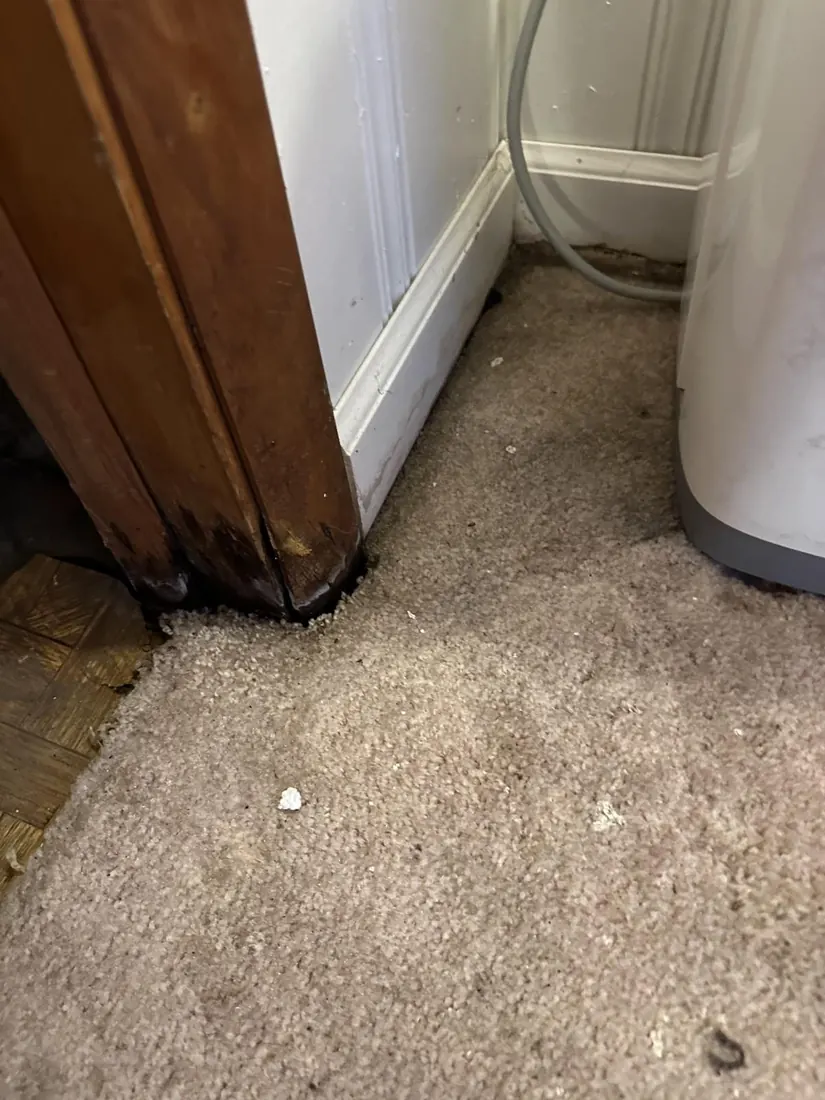
The decision comes down to the material, the water category, how long it was wet and the subfloor condition. Where the finish can be dried and the subfloor is sound, we save it. Where the finish is swollen or the water was contaminated, replacement is usually the honest call. Either way the subfloor has to be verified dry before new flooring goes down, which is part of reconstruction. Laying new flooring over a damp slab is a guaranteed callback.
Imagine a basement with luxury vinyl plank over a concrete slab, flooded by a pump failure. The planks look untouched, but readings at the seams and a lifted corner show the slab beneath is wet across a wide area. Sections of LVP are lifted, the slab is dried and verified, and because the planks themselves are undamaged and the water was clean, they are re-laid over the dry slab. A laminate threshold that swelled is replaced. This is a representative example of how flooring decisions are made, not a specific completed project.
Flooring restoration depends on subfloor drying, overlaps with carpet work in mixed basements, and feeds the reconstruction. Every decision is confirmed with moisture readings.
Basement flood recovery usually takes several of these working together.
Tell us your city, water depth, and whether water is still coming in. We'll walk you through safe next steps and check cleanup availability in your area.
☎ (877) 919-1672 Request Basement Flood Cleanup