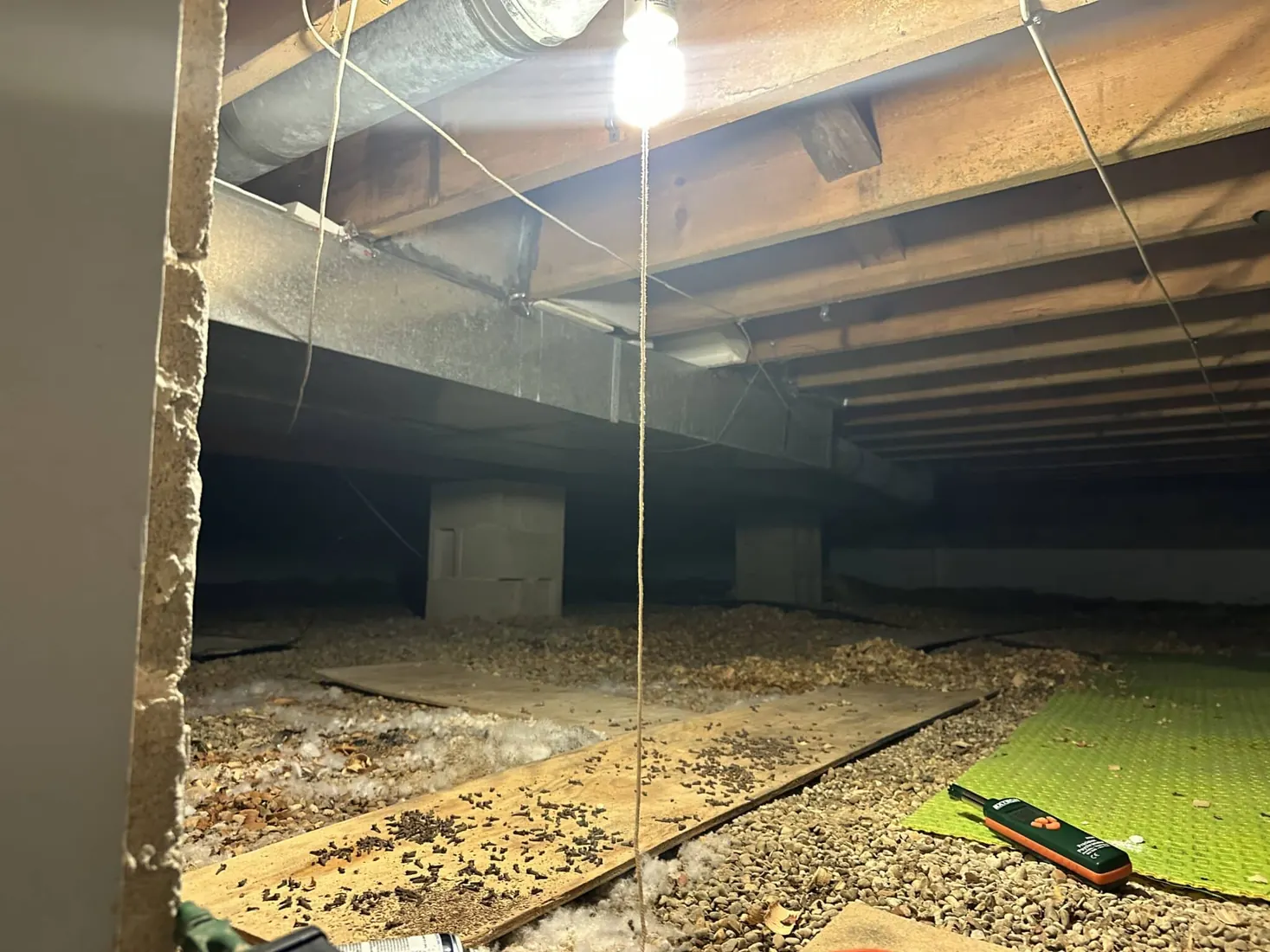
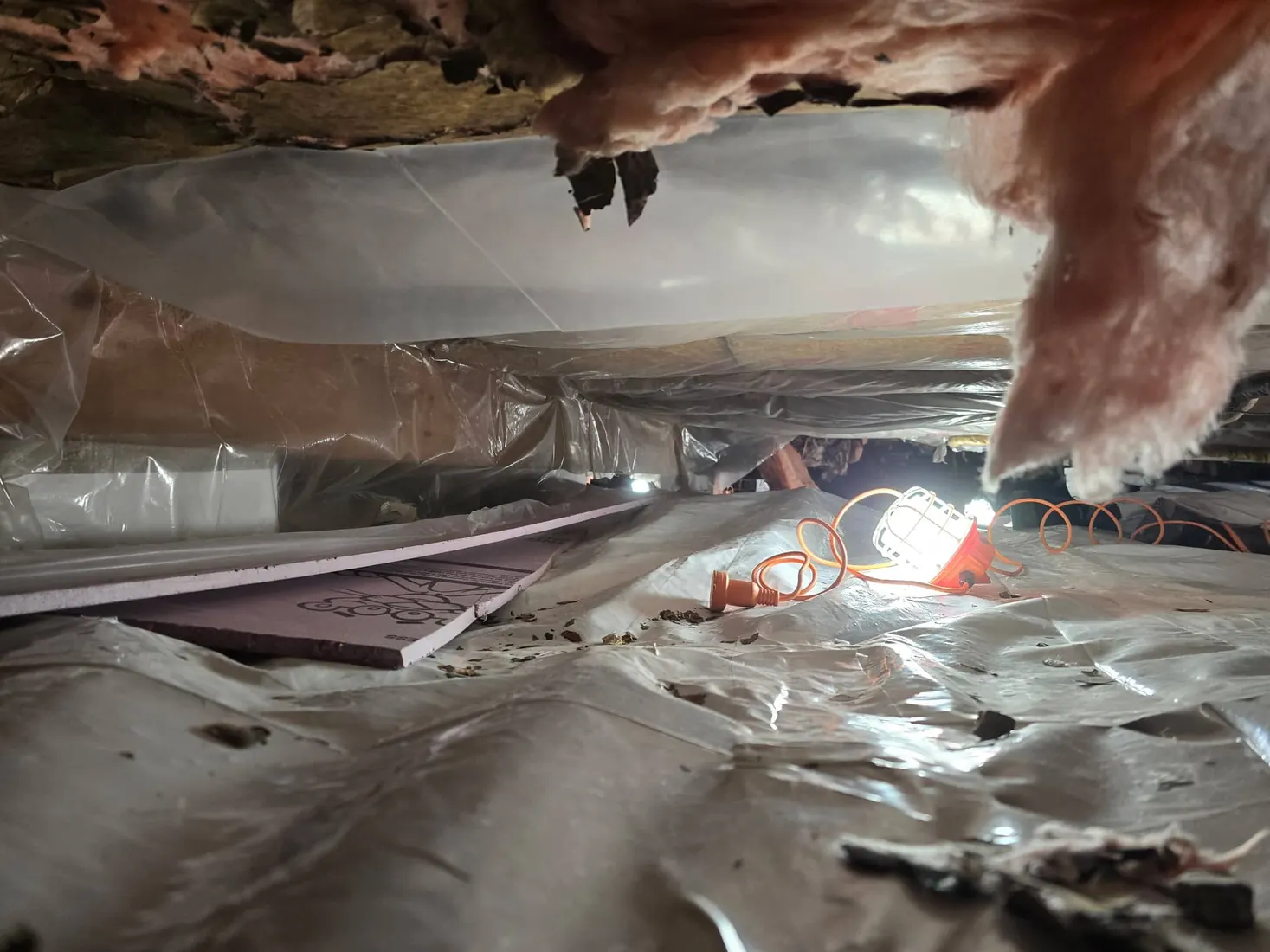
Not every home has a full basement, and many have a crawl space, which a sump pump failure floods just the same. Crawl space flood cleanup deals with the particular challenges of these low, tight areas: standing water against the ground, soaked insulation and framing overhead, and the damp, enclosed conditions that make them one of the most reliable places in a house for mold to take hold unnoticed.
A crawl space combines the worst conditions for drying: little airflow, low clearance, an earthen or bare-concrete floor, and framing and insulation directly overhead. Water that collects there sits against the ground and wicks into the floor joists and subfloor of the room above. Sump pump crawl space flood cleanup is adapted to these conditions, access and safety come first, then water removal and controlled drying.
Because people rarely go into a crawl space, flooding there often goes unnoticed until the smell reaches the living space above or mold shows up on the subfloor. By then it has had time to spread.
Crawl space cleanup works in confined, low-clearance conditions to remove water and dry the substructure.
What the Cleanup Involves
Safe access into a confined, low-clearance space.
Water extraction of standing water against the ground or vapor barrier.
Removing saturated insulation that fell or soaked through overhead.
Drying the joists, subfloor and substructure with directed airflow and dehumidification.
Addressing the vapor barrier and moisture control to keep the space dry afterward.
Checking for and addressing mold on the joists and subfloor.
The Crawl Space Process, Step by Step
Assess and establish safe access to the confined space.
Extract standing water from the ground surface or vapor barrier.
Remove soaked insulation and any unsalvageable materials.
Dry the substructure with directed airflow and dehumidification.
Verify the joists and subfloor reach a dry standard.
Restore moisture control, including the vapor barrier, to prevent recurrence.
Addressing the vapor barrier and moisture control helps keep a crawl space dry after the flood is cleaned up.
Crawl Spaces and Hidden Mold
Because they are dark, damp and rarely visited, crawl spaces often grow mold on the joists and subfloor before anyone notices, which then affects the air and the floor of the home above. Drying thoroughly and verifying it is essential, and where growth has started it connects to mold remediation. This is a basement-adjacent service we provide where the crawl space is genuinely part of the flooded structure.
An Illustrative Crawl Space Job
Imagine a home where a pump failure let water into the crawl space, discovered only when a musty smell reached the living room. Crews establish safe access, extract the standing water from the vapor barrier, remove the soaked batt insulation that had fallen from between the joists, dry the joists and subfloor with directed airflow and dehumidification, address early mold on the framing, and restore the vapor barrier for ongoing moisture control. This is a representative example, not a specific completed project.
How Crawl Space Cleanup Fits the Rest of the Cleanup
Crawl space work uses the same drying and verification principles as basement work, often involves insulation removal, and connects to mold remediation where growth has started.
Related Services
Basement flood recovery usually takes several of these working together.
Is a flooded crawl space as serious as a flooded basement?
It can be. Water in a crawl space sits against the ground and wicks into the joists and subfloor of the room above, and the damp, enclosed conditions make it a prime spot for mold that then affects the home's air and floors. It needs proper water removal and drying, not just time.
Can you dry a crawl space that's hard to access?
Yes. Drying a crawl space is adapted to the confined, low-clearance conditions with directed airflow and dehumidification after the water is removed. Safe access is established first, and saturated insulation overhead is usually removed so the substructure can dry.
What about the vapor barrier and long-term moisture?
Part of the cleanup is addressing the vapor barrier and moisture control so the space does not stay damp after the flood. A crawl space that is dried but left with poor moisture control can re-develop problems, so it is handled as part of the restoration where applicable.
How would I even know my crawl space flooded?
Often by a musty smell in the rooms above, higher humidity, or mold appearing on the subfloor or lower walls, since few people inspect a crawl space routinely. If a sump pump failed and you have a crawl space, it is worth checking even if the living area looks fine.
Does crawl space insulation always need to be removed after flooding?
Saturated batt insulation usually does, because it holds water against the joists and dries poorly. Lightly affected or more water-resistant insulation is assessed case by case. The goal is to let the substructure dry, so anything holding moisture against it comes out.
Can mold in a crawl space affect the rest of the house?
Yes. Air and odors from a crawl space can migrate into the living space above, and mold on the subfloor sits directly beneath the home's floors. That is why thorough drying, verification and, where needed, remediation matter even though the space is out of sight.
Basement Flooded After a Sump Pump Failure?
Tell us your city, water depth, and whether water is still coming in. We'll walk you through safe next steps and check cleanup availability in your area.