Some materials can be dried and saved. Others are too saturated, contaminated or deteriorated to recover and have to come out before they rot or grow mold. Flood-damaged material removal is the selective, documented demolition phase of sump pump flood cleanup, and the key word is selective: removal should be justified by the actual damage, confirmed with readings, not a blanket tear-out that pads the bill.
The point of sump pump flood damage removal is to take out only what genuinely cannot be saved, so drying and rebuilding can proceed cleanly. A good crew removes a wet material because a moisture reading, the water category or visible deterioration says it should, not because tearing out more is faster to bill. Over-demolition is a real problem in this industry, and you are entitled to ask what evidence supports any removal before you approve it.
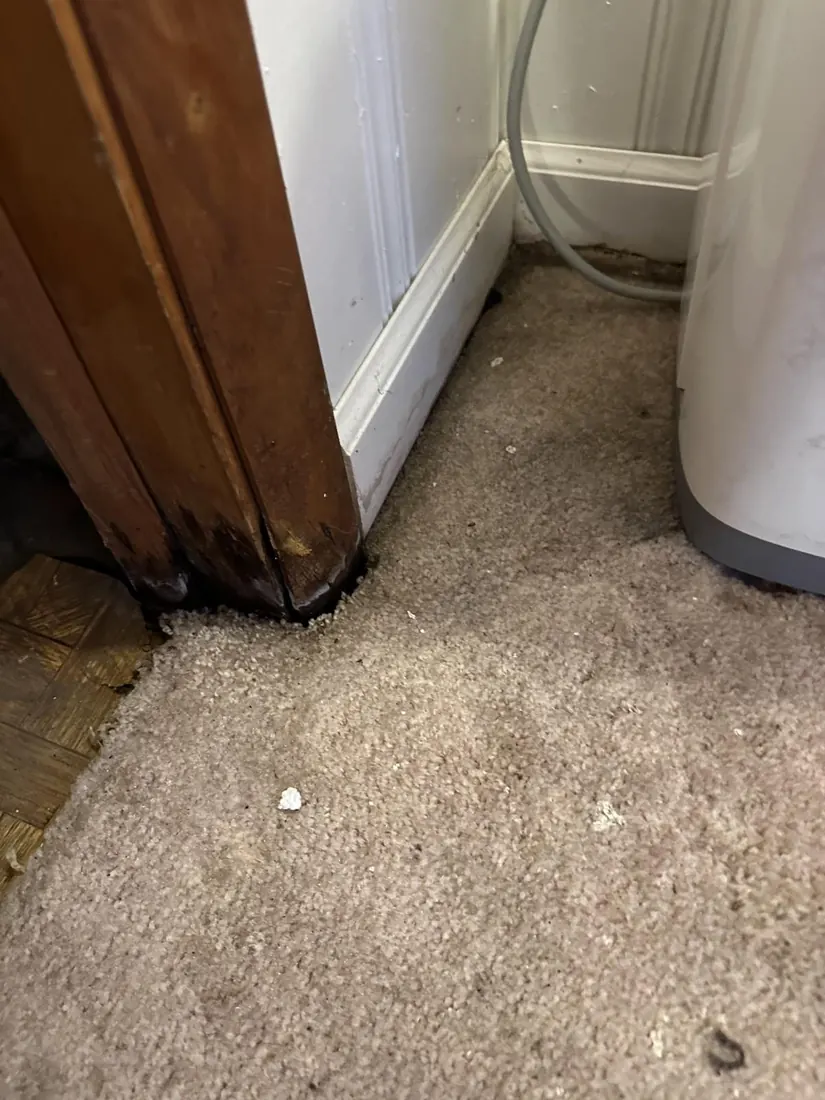
Common removals after a sump pump flood include saturated carpet padding, flood-cut drywall, wet fiberglass insulation, swollen laminate and deteriorated subfloor sections. Each is a decision, documented with photos and readings.
| Factor | Pushes toward removal when... |
|---|---|
| Water category | Water was contaminated (Category 2 or 3). |
| Saturation | Material is fully saturated and cannot dry effectively in place. |
| Material type | Highly absorbent and slow-drying, like pad or fiberglass insulation. |
| Exposure time | Material sat wet long enough to deteriorate or begin growing mold. |
| Access for drying | Trapped in a cavity where airflow cannot reach it. |
When the bottom of drywall is saturated, crews often make a flood cut, removing the drywall to a clean line above the top of the wet zone so the wall cavity can be dried and the insulation inside assessed. The cut height is based on how far moisture wicked up, confirmed by readings, not a default. Removal is done cleanly, with contamination controls where the water was dirty, and debris is bagged and disposed of properly. Done well, a flood cut removes the minimum necessary and opens the wall for proper drying.
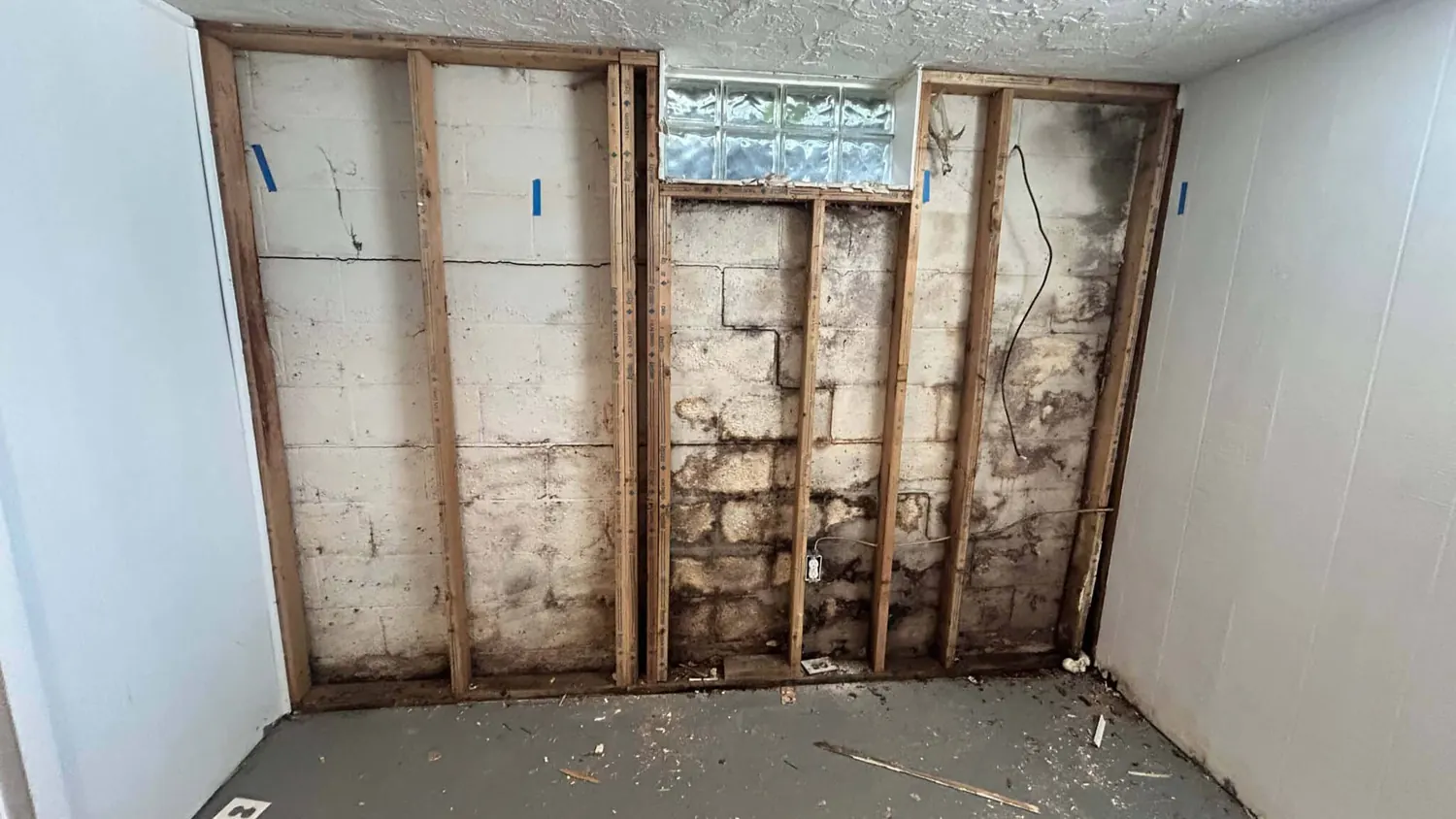
Material removal is not the end; it opens up wet cavities so framing and cavities can dry, removes the wet insulation that would otherwise hold moisture, and defines the scope of eventual reconstruction. We document what came out and why, which matters for both the rebuild estimate and your claim.
Consider a finished basement where clean water sat for three days before discovery. Readings show the carpet pad is saturated, the lower eighteen inches of drywall are wet with the fiberglass behind it soaked, and a section of laminate has swollen at the seams. The plan: pull and dispose of the pad, make a flood cut at a clean line above the wet zone, remove the saturated insulation, and take out the swollen laminate, while leaving the upper drywall and the sound framing to dry in place. Every removal is photographed with its reading. This is a representative example, not a specific completed project.
Removal is scoped by moisture detection, feeds directly into drying and cavity drying, and defines what the reconstruction has to rebuild. Specialist removals are covered on the drywall and insulation pages.
Basement flood recovery usually takes several of these working together.
Tell us your city, water depth, and whether water is still coming in. We'll walk you through safe next steps and check cleanup availability in your area.
☎ (877) 919-1672 Request Basement Flood Cleanup