Wet carpet is usually the first thing homeowners notice after a sump pump flood, and the most common question is simple: can it be saved? Carpet extraction and restoration covers both halves, pulling the water out fast, then making an honest, evidence-based call on the carpet and, separately, the padding underneath. The two are different materials with different fates, and treating them as one is a costly mistake.
This trips up a lot of homeowners. The carpet you see and the padding beneath it are separate materials with separate fates. Carpet fibers often dry and clean up; the padding underneath is a sponge that holds contaminated or stagnant water and is frequently removed. Sump pump flooded carpet cleanup treats them separately rather than as one unit, which is often the difference between replacing a pad and replacing an entire floor.
Why does my carpet still feel damp after extraction? Because the pad and the slab beneath hold moisture long after the surface fibers dry. That trapped moisture is exactly what grows mold and odor, which is why extraction has to be followed by drying and verification, not just a once-over with a vacuum.
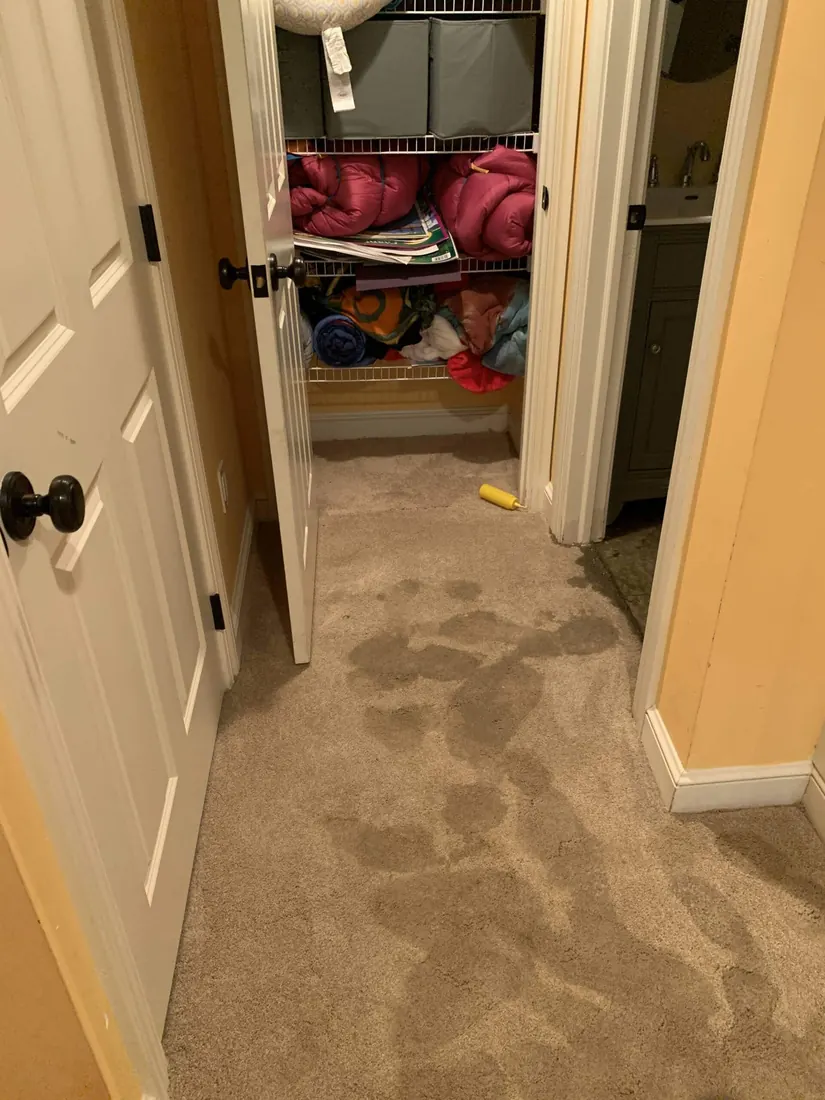
| Factor | Why it matters |
|---|---|
| Water category | Clean-water carpet is often salvageable; contaminated-water carpet frequently is not. |
| Exposure time | Carpet wet for days is far harder to save than carpet addressed within hours. |
| Padding | Usually removed after real saturation; it rarely cleans and dries reliably. |
| Backing and delamination | Separated backing or age can make restoration not worth it. |
| Subfloor condition | A wet slab or subfloor beneath must be dried regardless of the carpet's fate. |
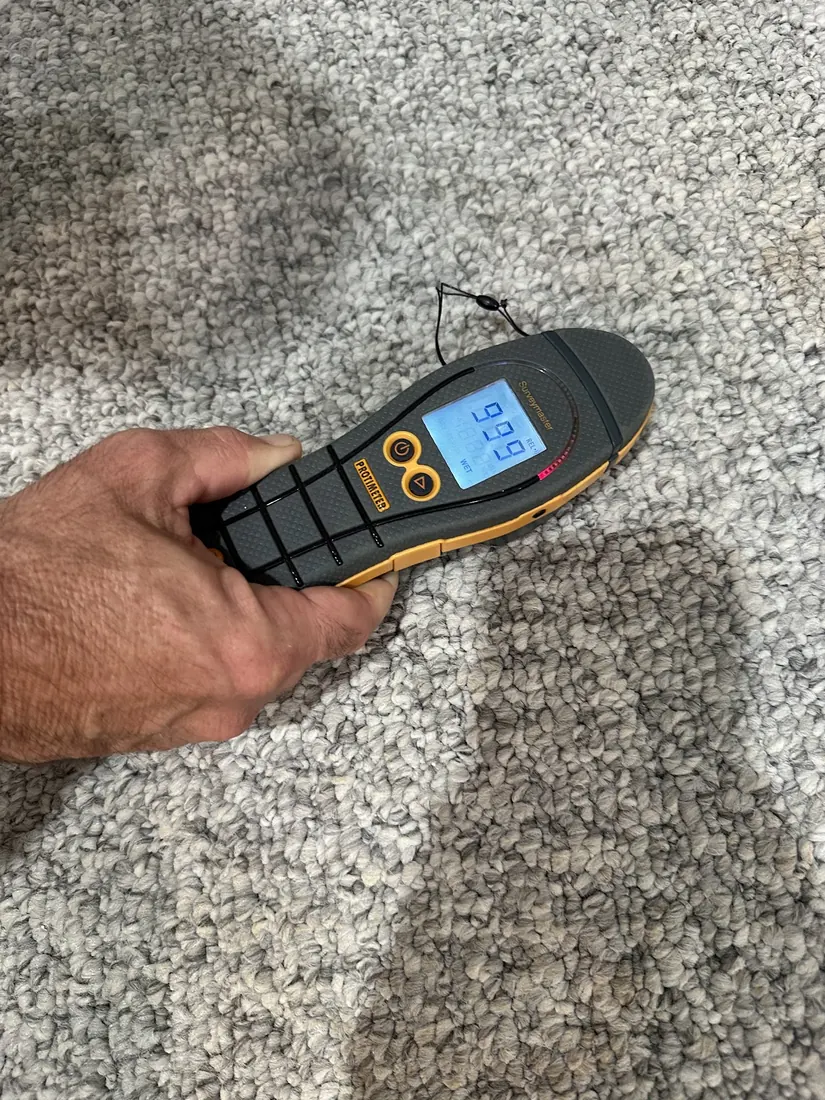
For clean water caught early, carpet can sometimes be dried in place using floating techniques that push dry air beneath it. For contamination, heavy saturation, or trapped subfloor moisture, the carpet is lifted so the pad and slab can be addressed directly. Moisture readings guide the choice; it is not a guess. Reinstalling carpet over a wet slab simply moves the problem out of sight, where it becomes mold.
Picture a basement with about 500 square feet of carpet soaked by clean water from a pump failure, discovered within a day. Extraction pulls the bulk water from the carpet, readings show the pad is saturated and the slab is wet, so the carpet is lifted along one wall, the pad is removed, and the slab is dried and verified. The carpet itself, clean-water and caught early, is cleaned, dried and reinstalled over fresh pad. Had the same carpet sat for a week or taken contaminated water, replacement would likely have been the honest call. This is a representative example, not a specific completed project.
Carpet extraction follows the main water extraction, depends on subfloor drying, and connects to hard-flooring restoration where a basement has both. Decisions are confirmed with moisture readings.
Basement flood recovery usually takes several of these working together.
Tell us your city, water depth, and whether water is still coming in. We'll walk you through safe next steps and check cleanup availability in your area.
☎ (877) 919-1672 Request Basement Flood Cleanup