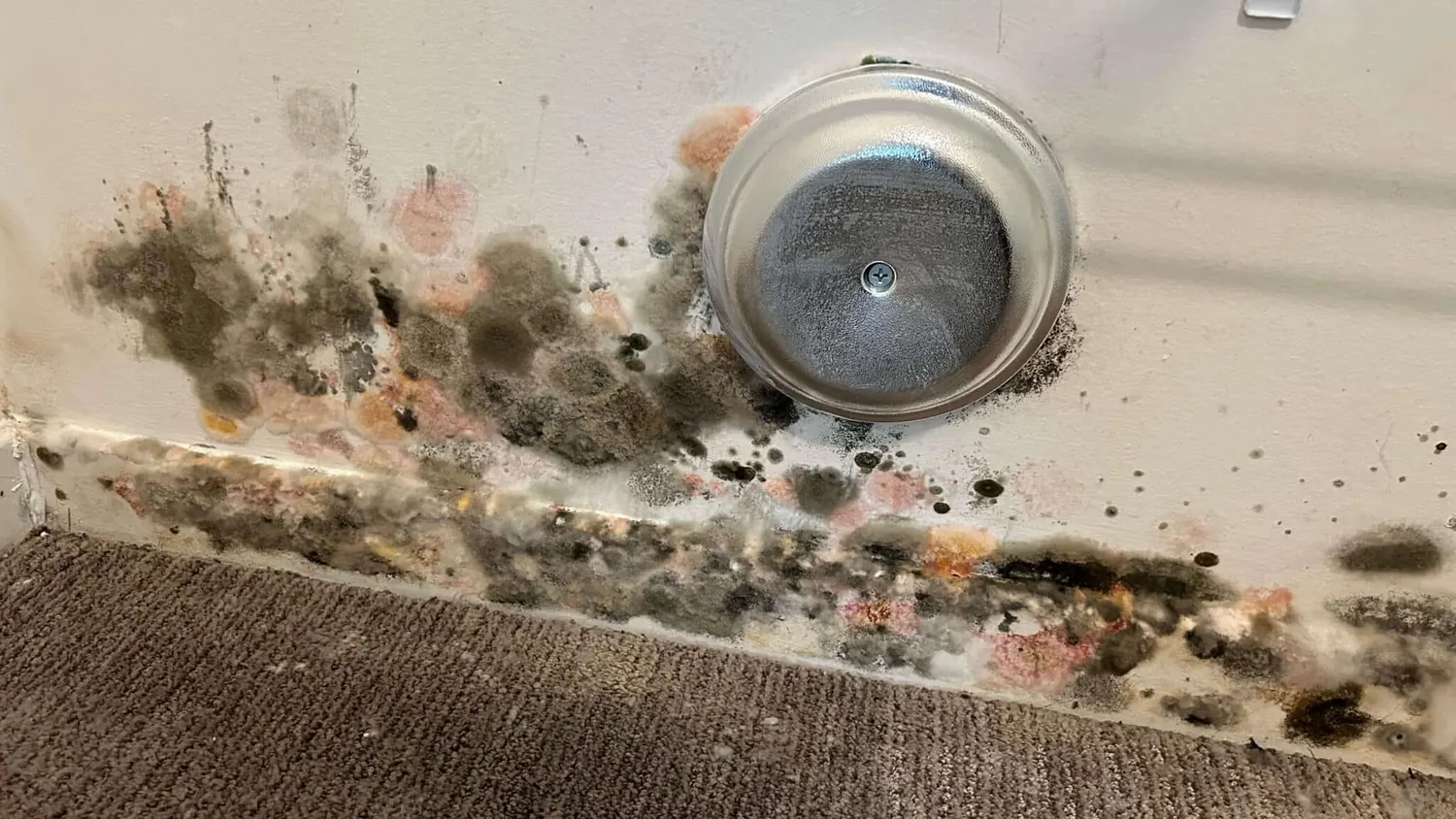
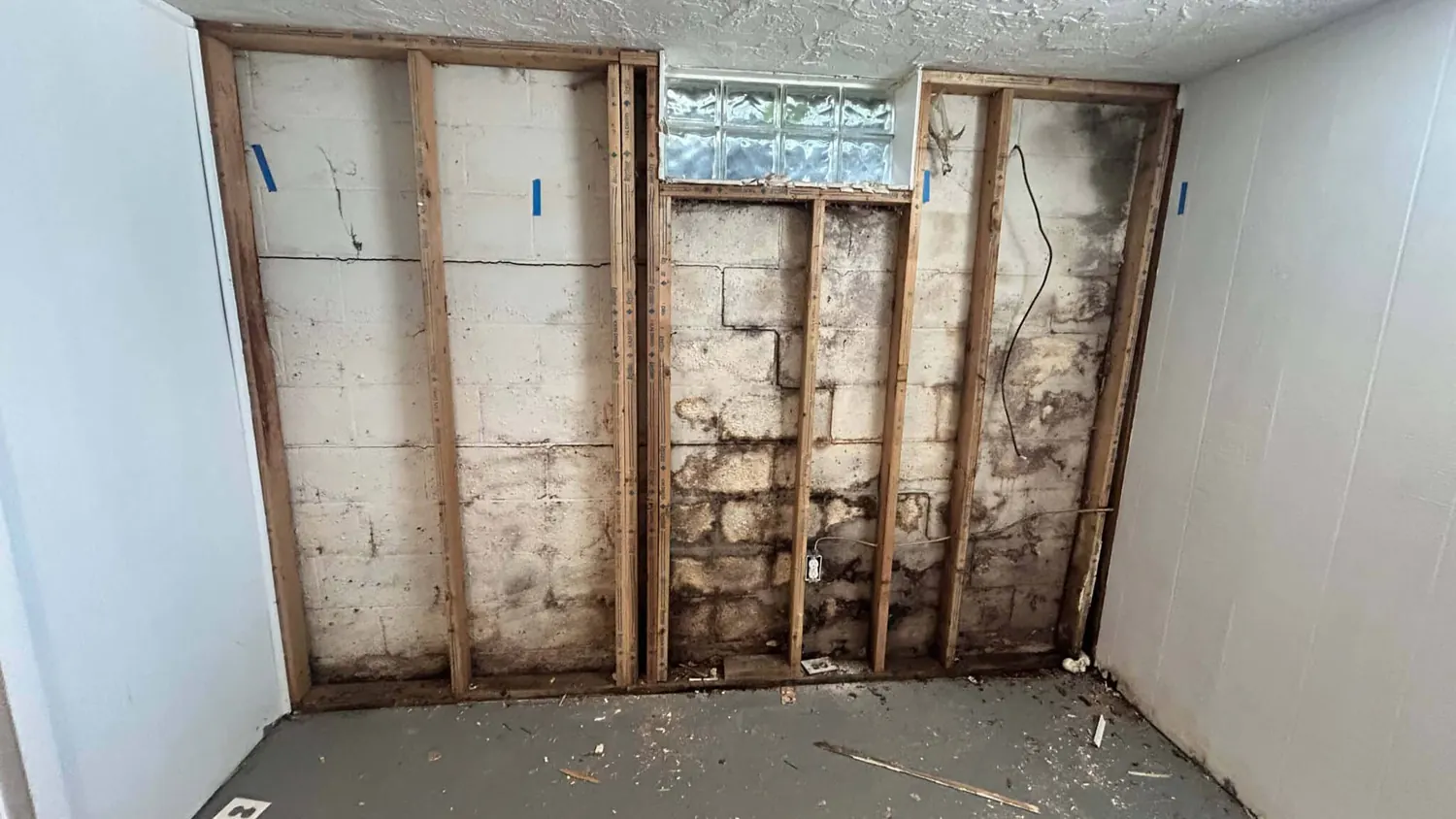
When a flooded basement is not dried fast enough, mold follows, often within days, and often hidden behind walls or under flooring. Mold remediation after a sump pump flood is the controlled process of containing, removing and verifying cleanup of that growth, so it does not keep spreading through the materials and the air. And it only works if the moisture that fed it is fixed at the same time.
Mold needs moisture, and a flooded basement provides it in abundance. The U.S. EPA advises cleaning and drying wet materials within about 24 to 48 hours where possible to reduce the risk, which is a guideline, not a guarantee. When drying is delayed, or moisture stays trapped in a wall cavity or under flooring, growth can start and spread into porous materials and the air. Sump pump flood mold remediation addresses growth that has already begun.
Mold is frequently hidden, behind drywall, under carpet padding, inside wall cavities. A moisture inspection often comes first to find where it is growing, because treating only the visible patch misses the rest.
Flood mold spreads across porous materials like drywall; remediation removes what cannot be cleaned and contains the rest.
How Remediation Is Done
Containment to keep spores from spreading to clean areas during the work.
Removal of moldy porous materials that cannot be cleaned, saturated drywall, insulation, padding.
Cleaning of salvageable surfaces using appropriate methods and PPE.
Air handling where appropriate to capture airborne spores during the work.
Drying the moisture source, because mold returns if the underlying moisture is not resolved.
Verification that the area is cleaned and dry.
The Remediation Process, Step by Step
Inspect and map the growth and the moisture feeding it.
Contain the work area to prevent spread.
Remove moldy porous materials that cannot be salvaged.
Clean salvageable surfaces with appropriate methods.
Dry the source so the conditions that grew mold are gone.
Verify the area is clean and dry before closing it up.
Mold frequently grows out of sight behind drywall and under flooring, which is why a moisture inspection comes first.
Remediation Only Works If the Moisture Is Fixed
This is the point most important to understand: removing visible mold without fixing the moisture is temporary. Mold grew because something stayed wet. Effective remediation always pairs with drying the structure and resolving the water source, otherwise it comes back. Where mold remediation requires licensing in your area, it is performed only where we are genuinely qualified to do so. We will not overstate what we are permitted to handle.
An Illustrative Remediation Job
Consider a basement flooded weeks earlier and only partly dried, now showing mold along the base of a wall and a musty smell. An inspection finds growth on the lower drywall and inside the cavity, fed by a slab that never fully dried. The work area is contained, the affected drywall and insulation are removed, salvageable surfaces are cleaned, the slab and cavity are dried and verified, and the area is checked before rebuilding. Because the moisture source is resolved, the mold does not return. This is a representative example, not a specific completed project.
It depends on moisture, materials and conditions. The EPA points to a rough 24 to 48 hour window for drying wet materials to reduce mold risk, which means growth can begin quickly when drying is delayed. That window is a guideline to act fast, not a precise deadline.
Can mold be hidden behind walls or under flooring?
Yes, and it often is. Mold grows wherever moisture lingers, inside wall cavities, under carpet padding, beneath flooring. That is why a moisture inspection usually comes first, and why a musty smell with no visible mold still warrants investigation.
Does removing the mold fix the problem for good?
Only if the moisture that caused it is resolved. Mold grows because something stayed wet, so remediation is paired with drying the structure and addressing the water source. Remove the mold but leave the moisture, and it returns.
Is mold remediation the same as mold removal?
Remediation is the broader, controlled process, containment, removal of unsalvageable materials, cleaning, drying the source and verification. Simply scrubbing off visible mold without containment or fixing the moisture is not remediation and tends to fail.
Do you need to leave the home during remediation?
It depends on the extent and location of the growth and the containment used. Many jobs are done with containment while the home stays occupied; larger situations may warrant staying elsewhere. The assessment addresses this for your specific case.
Is mold remediation covered by insurance?
It depends on the policy and the cause. Mold stemming from a covered water loss may be treated differently from long-standing moisture problems, and many policies have specific mold provisions or limits. Documentation of the water source and the remediation supports the claim, but coverage is decided by your insurer.
Basement Flooded After a Sump Pump Failure?
Tell us your city, water depth, and whether water is still coming in. We'll walk you through safe next steps and check cleanup availability in your area.