Subfloor Drying and Restoration After Sump Pump Failure
The subfloor is where flood moisture hides longest. Water drains down through carpet and hard flooring and sits in the subfloor and concrete slab, often reading dry on the surface while the assembly stays wet underneath. Subfloor drying targets exactly that trapped moisture, the thing most likely to cause mold or a failed floor if it is missed, and it is the step that lets new flooring last.
Surface water is easy; the water that soaks into subfloor, OSB, plywood and the concrete slab beneath is not. These materials release moisture slowly, and because the floor covering sits on top, that moisture cannot simply evaporate away. Sump pump flood subfloor drying uses targeted airflow, dehumidification and, where needed, specialty drying methods to reach moisture the surface will not release on its own.
This is the moisture that gets skipped by crews in a hurry, and it is the moisture that causes the callback three months later: a cupped floor, a musty smell, or mold under a freshly laid surface.
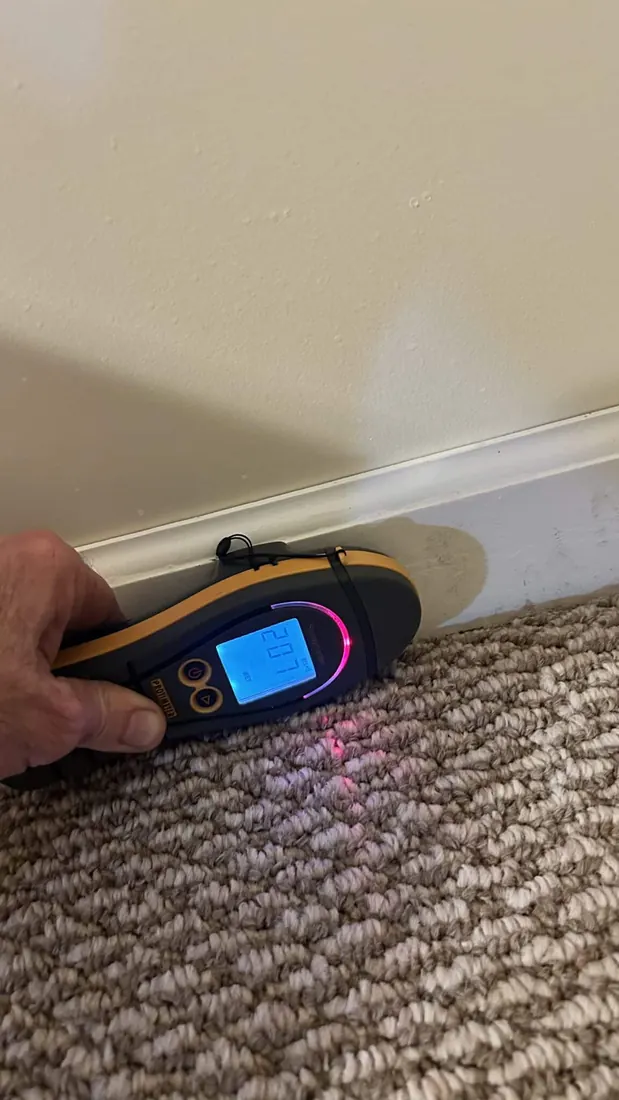
Readings at the slab and subfloor, not surface feel, tell you whether the assembly beneath the floor is actually dry.
How Trapped Subfloor Moisture Is Dried
Lifting or venting the finish where readings show trapped water, so the assembly can breathe.
Specialty drying systems that direct airflow into the floor assembly in stubborn cases.
Dehumidification to keep the surrounding air dry enough that the subfloor keeps releasing moisture.
Heat where appropriate to speed moisture movement out of dense materials.
Daily readings at the subfloor and slab against a dry standard until targets are met.
The Subfloor Drying Process, Step by Step
Map the moisture. Readings locate where water is trapped in the subfloor and slab.
Open access. Lift or vent flooring where in-place drying cannot reach.
Apply targeted drying. Specialty systems and dehumidification pull moisture from the assembly.
Monitor the slab. Concrete is tracked closely because it dries slowly and misleads by feel.
Verify to a dry standard. Continue until the subfloor and slab reach target readings.
Release for flooring. Only then is the floor cleared for reinstallation or new material.
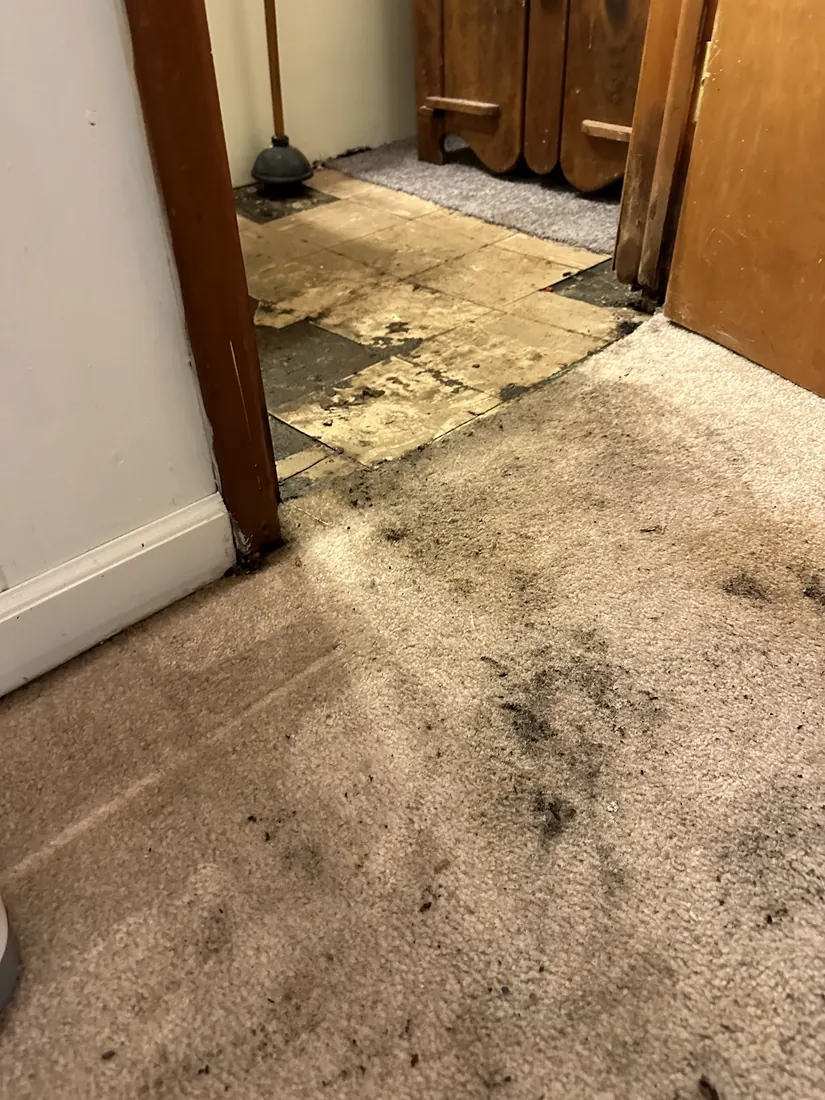
Water settles into the subfloor and slab near foundation walls, where it releases moisture slowly for days.
Concrete Holds Moisture Longer Than You Think
A concrete slab can read dry on top and still hold significant moisture, which matters enormously before new flooring goes down. Flooring installed over a damp slab can trap moisture, fail adhesives and grow mold underneath. We verify the slab and subfloor with documented readings before any reconstruction. This step is unglamorous and it is exactly why the rebuild lasts.
An Illustrative Subfloor Job
Take a basement where the visible floor was dried and the homeowner was ready to re-lay flooring, but a check showed the slab still reading well above a dry standard in the area that flooded deepest. Flooring in that zone is kept up, a specialty drying system and dehumidification run against the slab, and daily readings track it down over several days until it meets target. Only then does new flooring go in. Skipping that check would have sealed moisture under the new floor. This is a representative example, not a specific completed project.
How do you know if the subfloor is still wet when the surface feels dry?
With moisture meters and readings taken in the subfloor and slab, compared against a dry standard elsewhere in the home. Surface feel is unreliable; the assembly underneath holds moisture far longer, so instruments, not touch, confirm it.
Does the floor covering have to come up to dry the subfloor?
Sometimes. If readings show trapped moisture that in-place drying cannot reach, sections of flooring are lifted or vented so the subfloor and slab can release moisture. For lighter cases, specialty in-place drying can work. Readings decide.
Why dry the slab before installing new flooring?
Because a damp slab traps moisture under new flooring, can cause adhesive failure, and risks mold. Verifying the slab and subfloor reach a dry standard first is what keeps the new floor from failing, which is a core reason reconstruction waits for verified-dry readings.
How long does a concrete slab take to dry after flooding?
Concrete dries slowly and there is no universal time; it depends on how saturated it is, the humidity and the drying setup. It is tracked with readings until it reaches a dry standard, which can take longer than the materials above it.
Can you dry a subfloor without tearing out the whole floor?
Often, yes. Targeted access, venting and specialty drying systems can reach trapped moisture with minimal removal. Full removal is reserved for assemblies too saturated or deteriorated to dry in place, guided by readings.
What happens if the subfloor is not dried properly?
Trapped moisture can cup or buckle new flooring, fail adhesives, and grow mold hidden beneath the surface, turning a finished job into a do-over. That is why verification to a dry standard is non-negotiable before flooring goes down.
Basement Flooded After a Sump Pump Failure?
Tell us your city, water depth, and whether water is still coming in. We'll walk you through safe next steps and check cleanup availability in your area.