The moisture you cannot see is the moisture that causes the worst problems. Water wicks into wall cavities and framing and sits there, hidden behind drywall, slowly feeding mold and weakening materials. Wall cavity and framing drying is the targeted work of reaching that concealed moisture and proving it is gone before the wall is closed, which is the step that prevents the nightmare of mold behind a finished wall.
You cannot dry what you cannot find. Sump pump flood wall cavity drying starts with detection, thermal imaging to flag suspect areas and moisture meters to confirm water inside the cavity and framing. That tells us which walls are actually wet inside, versus which just look damp on the surface, so we open only what needs opening.
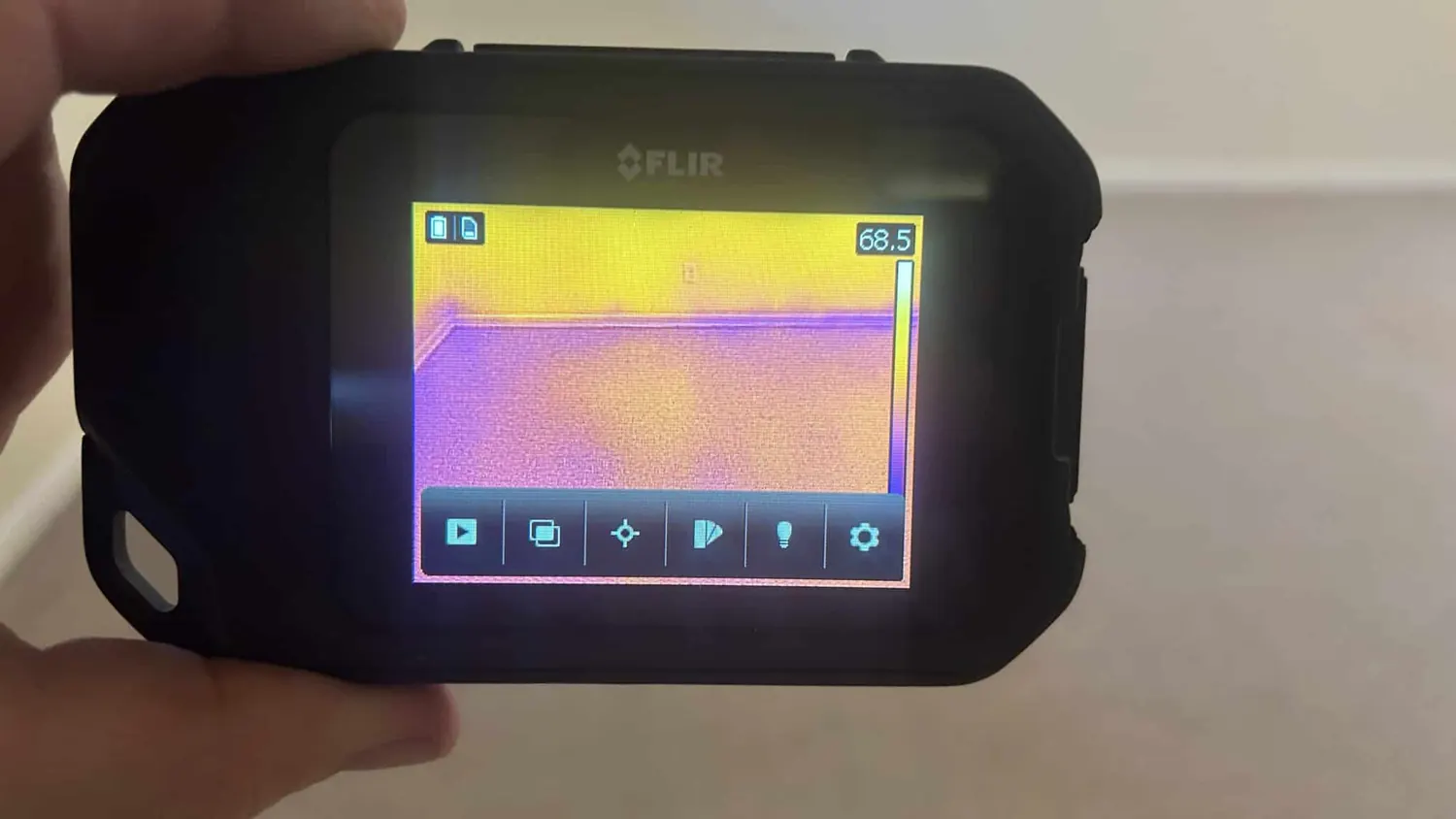
A closed wall cavity will not dry on its own, because there is no airflow inside it. Depending on how wet it is, we create controlled access and direct dry air into the cavity with specialty equipment. The access is scaled to the moisture:
Can framing be dried, or does it have to be replaced? Wood framing can usually be dried if it is addressed before it deteriorates. Moisture readings, not appearance, decide. Replacement is the exception, for framing that is rotted or structurally compromised.
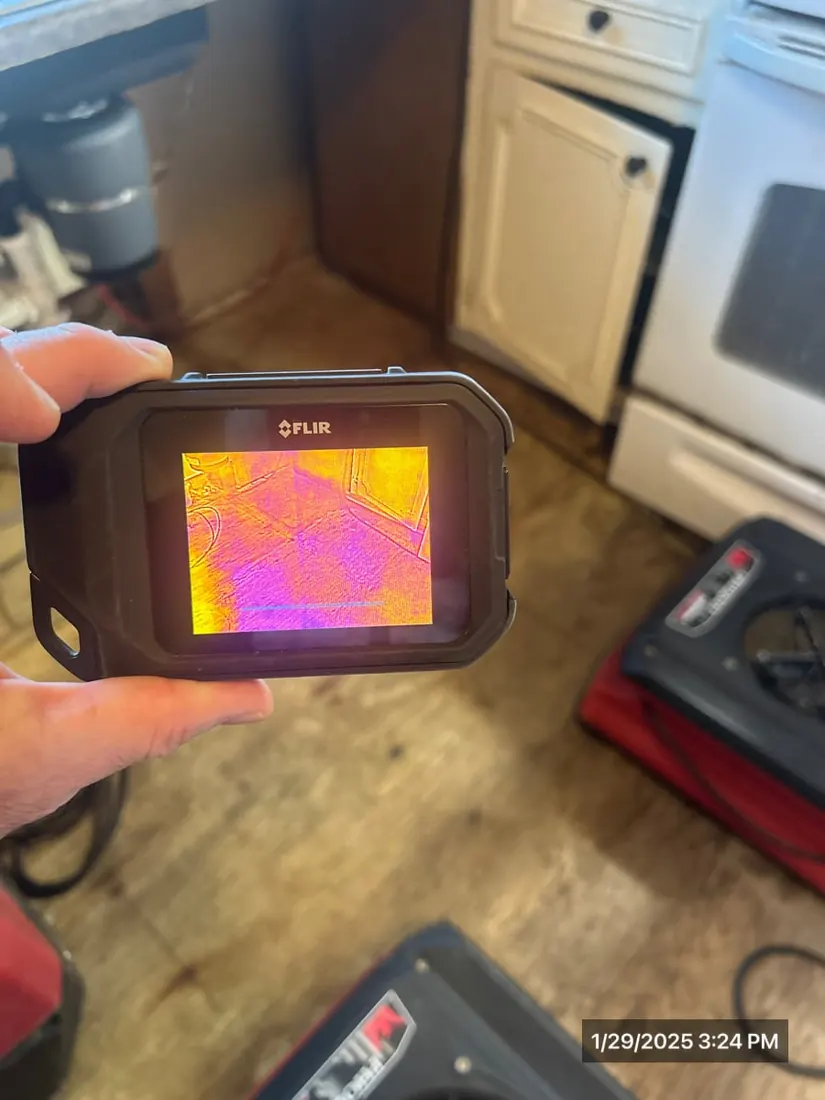
The whole point is to confirm the cavity and framing reach a dry standard before the wall is rebuilt. We take readings until targets are met and document them. This is the quiet step that prevents the nightmare scenario, mold discovered behind a wall that was finished and painted months earlier. A rebuild over a verified-dry cavity lasts; a rebuild over a wet one becomes a demolition. The reconstruction waits for the readings.
Imagine a basement where the floor dried quickly but a thermal scan showed a cool band along one stud wall. Meter readings confirmed the cavity and the bottom of several studs were still wet behind intact drywall. Rather than gut the wall, the crew removed the baseboard, drilled discreet vent holes, and ran a cavity drying system, monitoring the framing until it hit a dry standard. The wall was then closed and the baseboard reinstalled, with minimal visible disruption. This is a representative example, not a specific completed project.
Cavity drying is the concealed layer of structural drying, driven by detection, and often paired with drywall and insulation work before reconstruction.
Basement flood recovery usually takes several of these working together.
Tell us your city, water depth, and whether water is still coming in. We'll walk you through safe next steps and check cleanup availability in your area.
☎ (877) 919-1672 Request Basement Flood Cleanup