Emergency basement flood cleanup after sump pump failure, check availability in your area ☎ Call (877) 919-1672
Sump Pump Flood Cleanup Service

Water-Damaged Drywall Repair After Sump Pump Failure

Drywall wicks water upward like a straw, so even a few inches of basement flooding soaks the bottom of every wall it touches. Drywall repair after a sump pump failure covers the full decision: whether wet drywall can be dried and kept, how high a flood cut should go, and how the wall is rebuilt and finished afterward, with every call backed by a reading rather than a hunch.

Dry in Place or Flood Cut?

This is the core decision. Clean-water drywall caught early can sometimes be dried in place. But drywall that is heavily saturated, was hit by contaminated water, or hides wet insulation behind it usually needs a flood cut, removing the lower portion of the wall to a line above where moisture wicked up. Sump pump flood damaged drywall repair makes that call based on the water category and moisture readings, not habit.

Why cut the wall at all? Because the problem is usually inside: saturated gypsum and the insulation behind it hold water and grow mold where you cannot see it. Opening the wall lets the cavity and framing dry, and lets you verify they did.
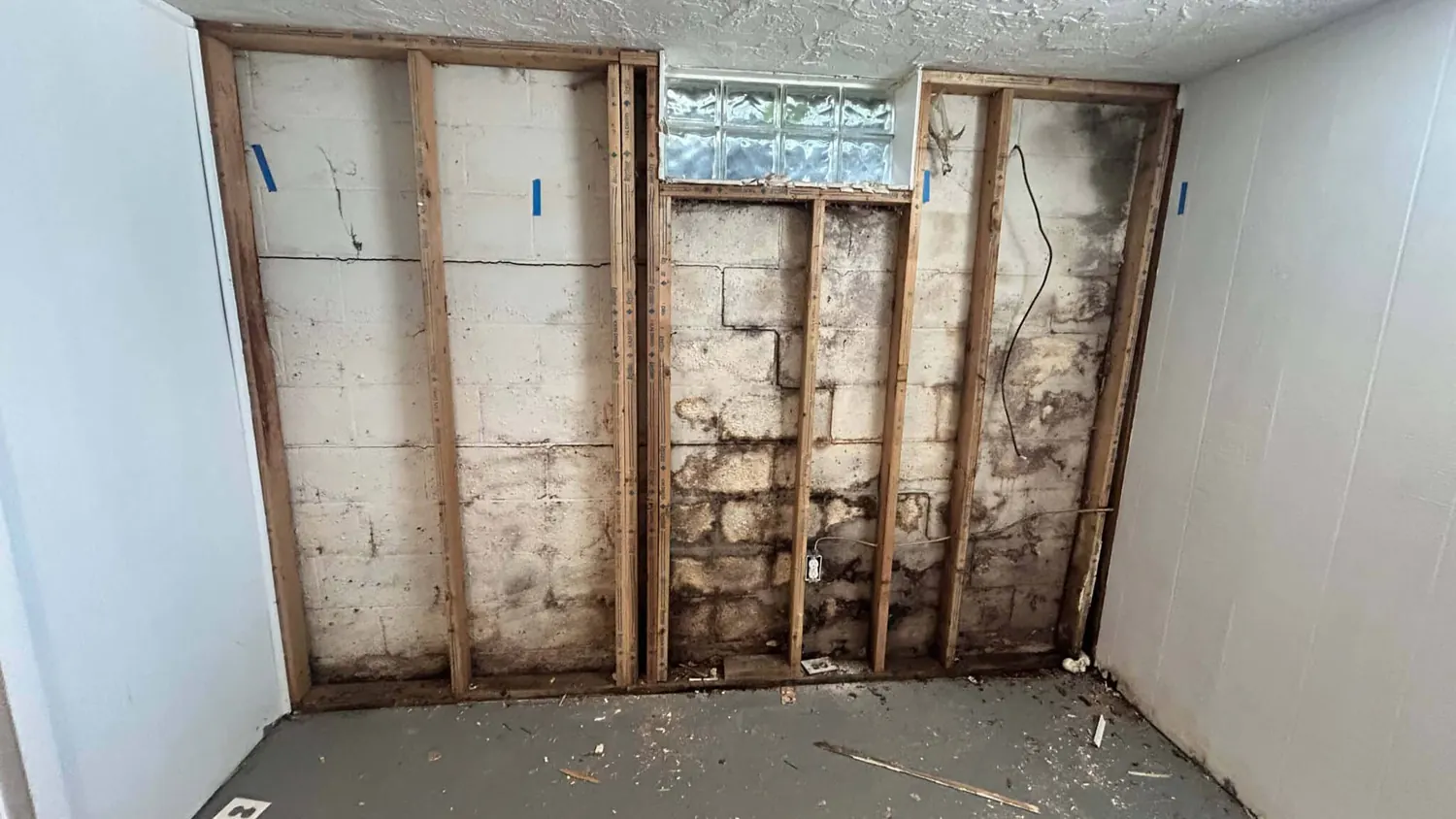
Mold found behind basement drywall and wall studs, exposed after removal
Opening a wall often shows why wet drywall gets removed: saturated gypsum and growth hidden behind an intact-looking surface.

The Drywall Process, Step by Step

  1. Read the wall. Measure how far moisture wicked up and the water category.
  2. Decide dry or cut. Dry in place only if clean, lightly wet and dryable; otherwise flood cut.
  3. Make a clean flood cut to a consistent line above the wet zone.
  4. Remove wet insulation behind the cut so the cavity can dry.
  5. Dry and verify the framing and cavity to a dry standard.
  6. Rebuild and finish: new drywall, tape, mud, prime and paint.

How High the Flood Cut Goes

The cut height is set by how far moisture actually traveled up the wall, confirmed with a meter, commonly cut to a clean, consistent line above the top of the wet zone for a tidy rebuild. It is a measured decision, and you are entitled to see the readings behind it. The removed drywall and any wet insulation come out so the cavity can dry. Cutting too low leaves wet gypsum; cutting too high removes sound material for no reason. The reading sets the line.
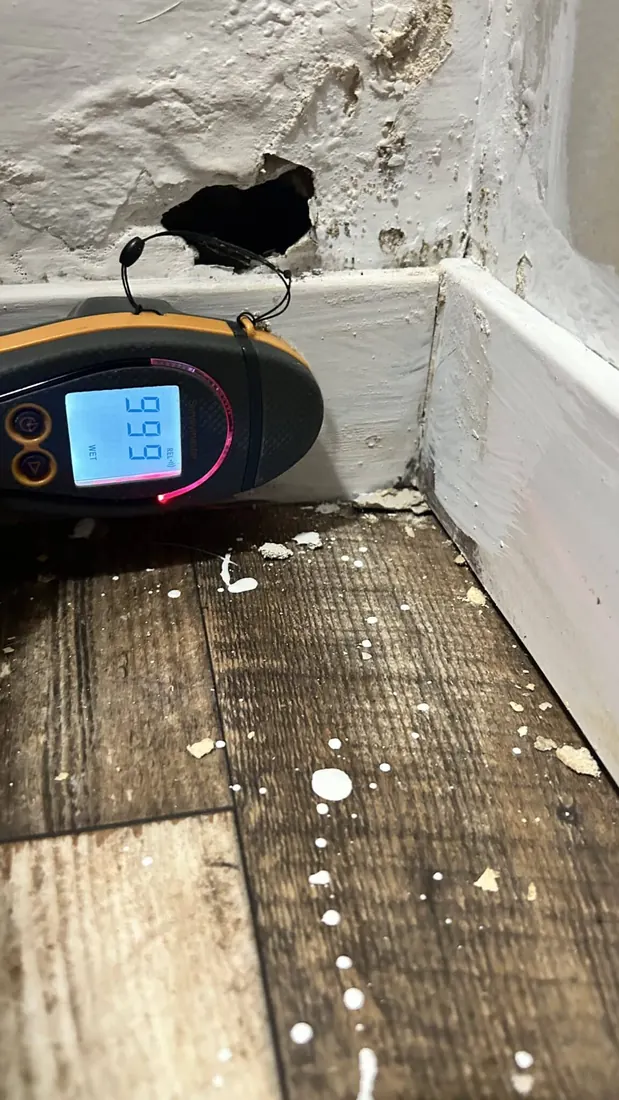
Moisture meter taking a reading at a baseboard to gauge how far water wicked up the wall
A reading at the base of the wall shows how far moisture wicked, which sets where a flood cut is made.

Rebuilding and Finishing

Once the framing and cavity are verified dry, new drywall is hung, taped, finished and painted to match, which is part of reconstruction. Rebuilding only happens after the wall is confirmed dry, because closing a wet cavity behind fresh drywall is a direct path to hidden mold. A good finish blends the repair into the existing wall so you cannot see where the flood cut was.

An Illustrative Drywall Job

Consider a basement where clean water rose about six inches before the pump failure was caught. Readings show moisture wicked roughly a foot up the drywall, with the fiberglass behind it damp. The crew makes a flood cut at a clean two-foot line for a tidy rebuild, pulls the wet insulation, dries and verifies the framing and cavity, then hangs new drywall, tapes, finishes and paints so the repair disappears. This is a representative example of how the decision is made, not a specific completed project.

How Drywall Repair Fits the Rest of the Cleanup

Drywall work is scoped by moisture detection, pairs with insulation removal and cavity drying, and is completed in reconstruction.

Frequently Asked Questions

Does wet drywall always need to be removed?
No. Whether it is dried in place or flood-cut depends on the water category, how saturated it is, how far moisture wicked up, and whether wet insulation sits behind it. Clean-water drywall caught early can sometimes dry; contaminated or heavily saturated drywall is removed.
What is a flood cut?
Removing the lower section of drywall up to a clean line above where water wicked, so the wall cavity, insulation and framing can be assessed and dried. The height is based on moisture readings, not a fixed default, and it opens the wall for proper drying before rebuild.
Can drywall grow mold even if it looks dry?
Yes. The surface can look fine while the gypsum and insulation inside the wall stay wet and grow mold out of sight. That is exactly why saturated drywall is opened and the cavity dried and verified rather than painted over.
Will the repair be visible after it's finished?
A good rebuild tapes, finishes, primes and paints the new drywall to blend with the existing wall, so the flood-cut line is not visible once complete. Finishing quality is part of the reconstruction scope.
Why remove insulation behind the drywall?
Because saturated fiberglass inside a closed cavity dries very slowly and keeps the framing damp, risking mold. Removing it lets the cavity and studs dry and be verified before the wall is closed with new insulation and drywall.
How soon can drywall be replaced after a flood?
Only after the framing and cavity reach a dry standard on moisture readings. Replacing drywall over a wet cavity traps moisture and grows mold, so the timing is set by the drying, not by a fixed number of days.

Basement Flooded After a Sump Pump Failure?

Tell us your city, water depth, and whether water is still coming in. We'll walk you through safe next steps and check cleanup availability in your area.

☎ (877) 919-1672 Request Basement Flood Cleanup
