Drywall wicks water upward like a straw, so even a few inches of basement flooding soaks the bottom of every wall it touches, and the real damage is usually inside the cavity where you cannot see it. The question of whether to dry the wall or cut it out is the one that most affects your final bill, and it should be answered with a moisture reading, not a rule of thumb.
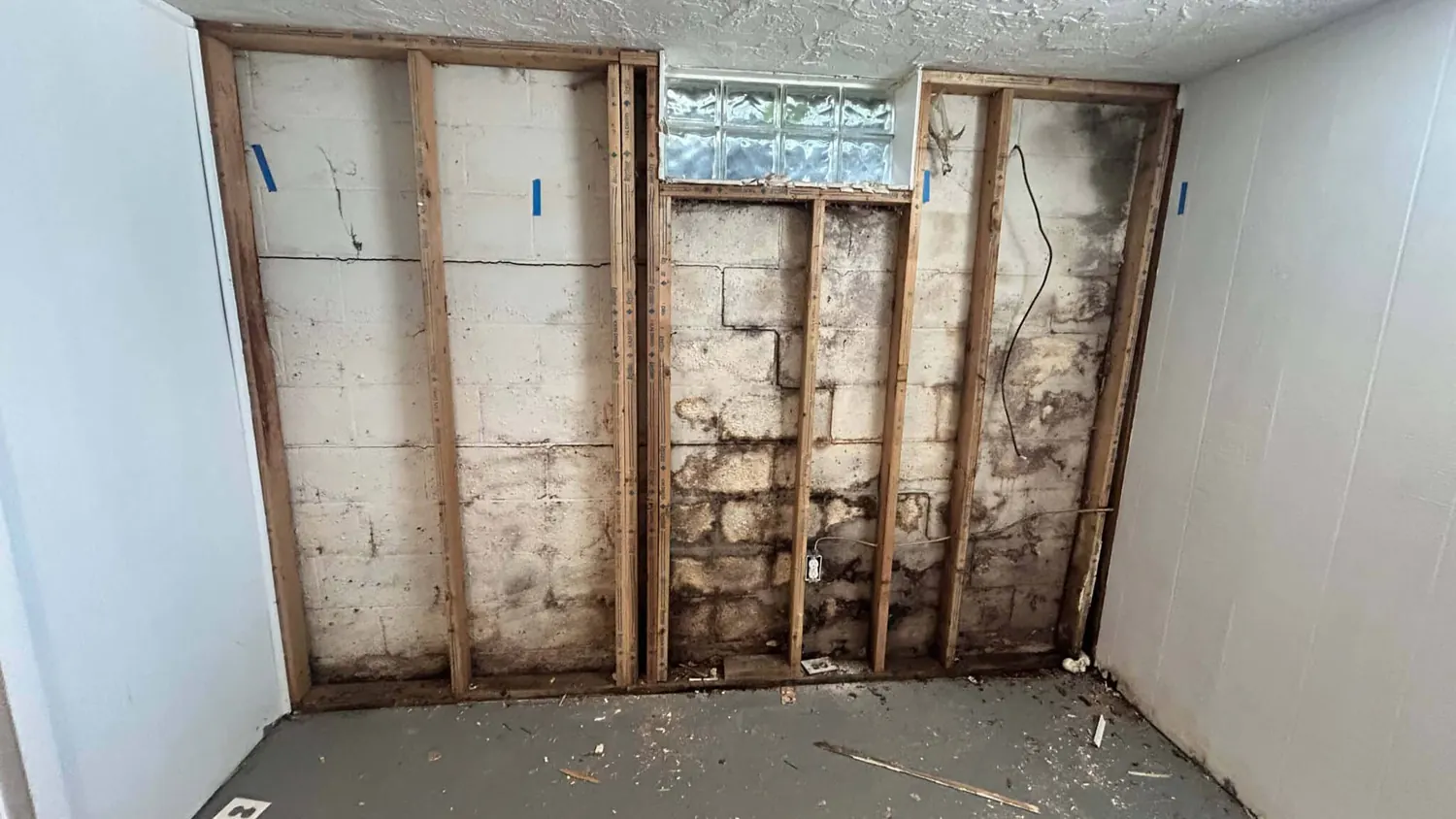
Flooded basement drywall can sometimes be dried in place when the water was clean and caught early, but drywall that is heavily saturated, was hit by contaminated water, or hides wet insulation usually needs a flood cut, removing the lower section to a clean line above where moisture wicked. Wet fiberglass insulation inside a closed cavity rarely dries and is typically removed so the cavity can dry.
Gypsum board wicks water up from the floor well above the visible waterline, and the paper facing holds moisture. A wall can look dry a foot up while the core and the insulation behind it are saturated. That is why the decision is driven by moisture readings that show how far moisture actually traveled, not by how the surface looks.
| Points toward drying in place | Points toward a flood cut |
|---|---|
| Clean (Category 1) water | Contaminated (Category 2 or 3) water |
| Caught quickly, limited wicking | Sat wet, moisture climbed high |
| No insulation behind it, or insulation is dry | Saturated insulation in the cavity |
| Readings trending down with drying | Readings stay high despite drying |
A flood cut removes the drywall to a clean, consistent line above the wet zone so the wall cavity and framing can dry and be verified. The cut height follows the readings, not a default; cutting too low leaves wet gypsum, cutting too high removes sound material for nothing. This is detailed service work, see water-damaged drywall repair.
Fiberglass batt insulation holds water and dries extremely slowly inside a closed wall with no airflow. While it stays wet it keeps the framing damp and creates an ideal spot for hidden mold. So saturated insulation is generally removed, not left behind a reinstalled wall, which is covered under wet insulation removal and replacement. Lightly affected insulation from clean water is sometimes dried; contaminated or saturated insulation is replaced.
Closing a wall before the cavity is verified dry is the single most common way mold ends up behind fresh paint. The restoration link to watch for is mold after a sump pump failure.
This guide is general information for US homeowners, not a property-specific diagnosis, a pump-repair manual, a structural or electrical assessment, or insurance advice. Water category, salvage, drying time, cost and coverage depend on your specific situation and policy. MH Restoration provides cleanup and water damage restoration; pump, plumbing, electrical and drainage repairs are separate trades.
Tell us your city, water depth, and whether water is still coming in. We'll walk you through safe next steps and check cleanup availability in your area.
☎ (877) 919-1672 Request Basement Flood Cleanup