After a sump pump flood, the most expensive questions are about materials: can the carpet be saved, is the luxury vinyl plank really fine because it is waterproof, do the cabinets have to come out? There is no single answer, because each material soaks, swells and dries differently. What there is, is a clear set of factors that decide save versus replace, and a few traps that cost people later.
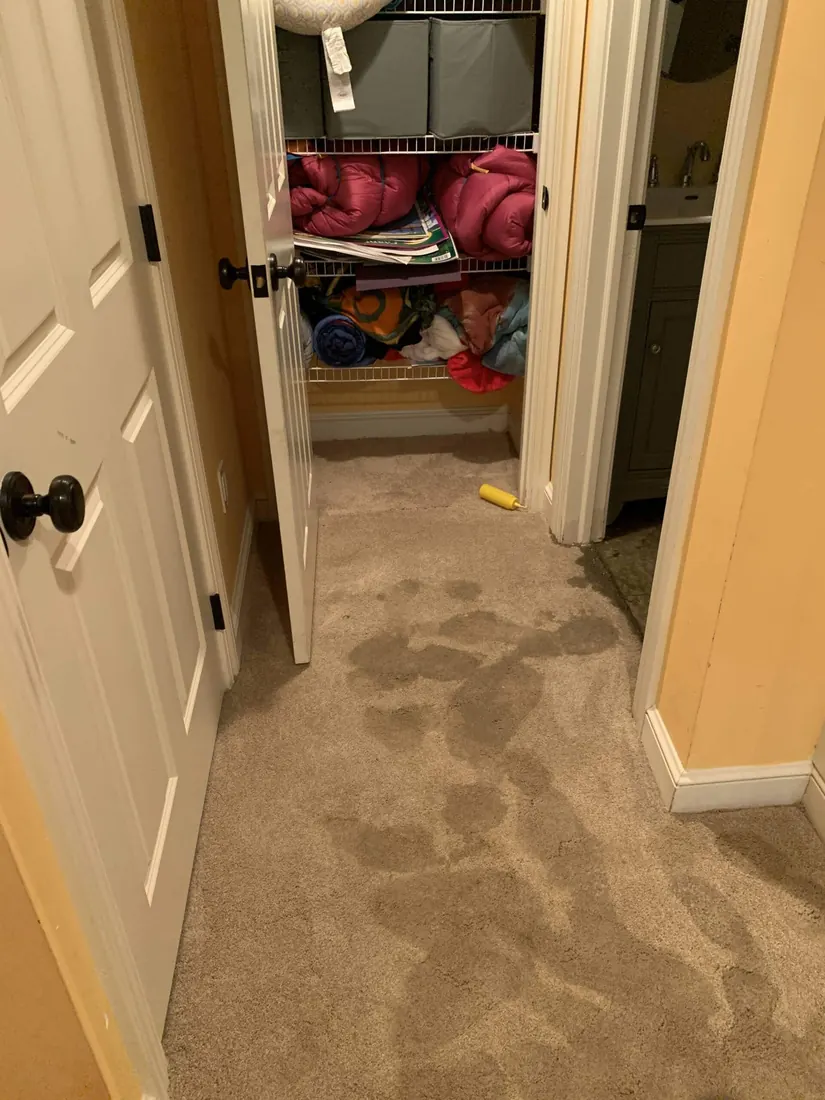
Whether carpet, LVP, laminate, engineered wood or cabinets survive sump pump flooding depends on the water category, how long they stayed wet, the material's construction and whether the assembly underneath can be dried. Carpet is sometimes saved while its padding is replaced; swollen laminate rarely survives; waterproof LVP can still trap water against the subfloor; and cabinet bases often hold water out of sight.
| Material | How it reacts | What decides save vs. replace |
|---|---|---|
| Carpet | Absorbs and holds water in fibers and backing | Water category, exposure time, backing condition, cleanability |
| Carpet padding | Acts as a sponge; dries slowly | Usually replaced after real saturation or any contamination |
| Laminate | Fiberboard core swells and crumbles | Once swollen, typically replaced |
| Luxury vinyl plank (LVP) | Surface resists water; seams and edges let it under | Condition of the plank plus whether the subfloor is dry |
| Engineered wood | Can cup, swell and delaminate | Exposure, construction and subfloor moisture |
| Cabinets (MDF/particleboard) | Wick water up the base; swell and lose integrity | Core material and how long the base sat wet |
Carpet and its padding are two materials with two fates. The carpet fibers often dry and clean up; the pad beneath is a sponge that holds stagnant or contaminated water and is frequently removed and replaced. This is why your carpet can feel damp long after the water is gone, the fibers dried but the pad and subfloor did not. The specialist service is carpet extraction and restoration.
Luxury vinyl plank is marketed as waterproof, and the plank material usually is. The floor system is not sealed. Water enters at seams, edges and transitions and sits between the plank and the subfloor, where it cannot evaporate. The surface looks perfect, so the floor gets left down and the subfloor never dries, which is how mold shows up weeks later. Waterproof describes the plank, not the room; the subfloor still has to be checked and dried. That is handled under water-damaged flooring restoration and moisture detection.
Base cabinets made of MDF or particleboard wick water up from the floor and swell from the bottom, often while the visible surface still looks acceptable. Water can also sit trapped in the kickspace underneath. Cabinets are assessed for how far water climbed and whether the core has lost integrity; contents may be handled separately under contents restoration.
Every save-or-replace call comes down to the same four questions: how contaminated was the water, how long did the material sit wet, what is it made of, and can the assembly underneath be dried and verified? Answered honestly with moisture readings, they prevent both unnecessary demolition and the false economy of saving something that will fail. Materials that cannot be dried or cleaned move to documented removal, and the drying side is in how to dry a basement after sump pump failure.
This guide is general information for US homeowners, not a property-specific diagnosis, a pump-repair manual, a structural or electrical assessment, or insurance advice. Water category, salvage, drying time, cost and coverage depend on your specific situation and policy. MH Restoration provides cleanup and water damage restoration; pump, plumbing, electrical and drainage repairs are separate trades.
Tell us your city, water depth, and whether water is still coming in. We'll walk you through safe next steps and check cleanup availability in your area.
☎ (877) 919-1672 Request Basement Flood Cleanup