A sump pit filling during a storm is routine. Water climbing over the rim and spreading across your basement floor is not. The right response in the first hour protects people from a real electrical hazard, keeps a contained problem from soaking into finished materials, and gets the two separate jobs, fixing the pump and restoring the damage, moving in the right order.
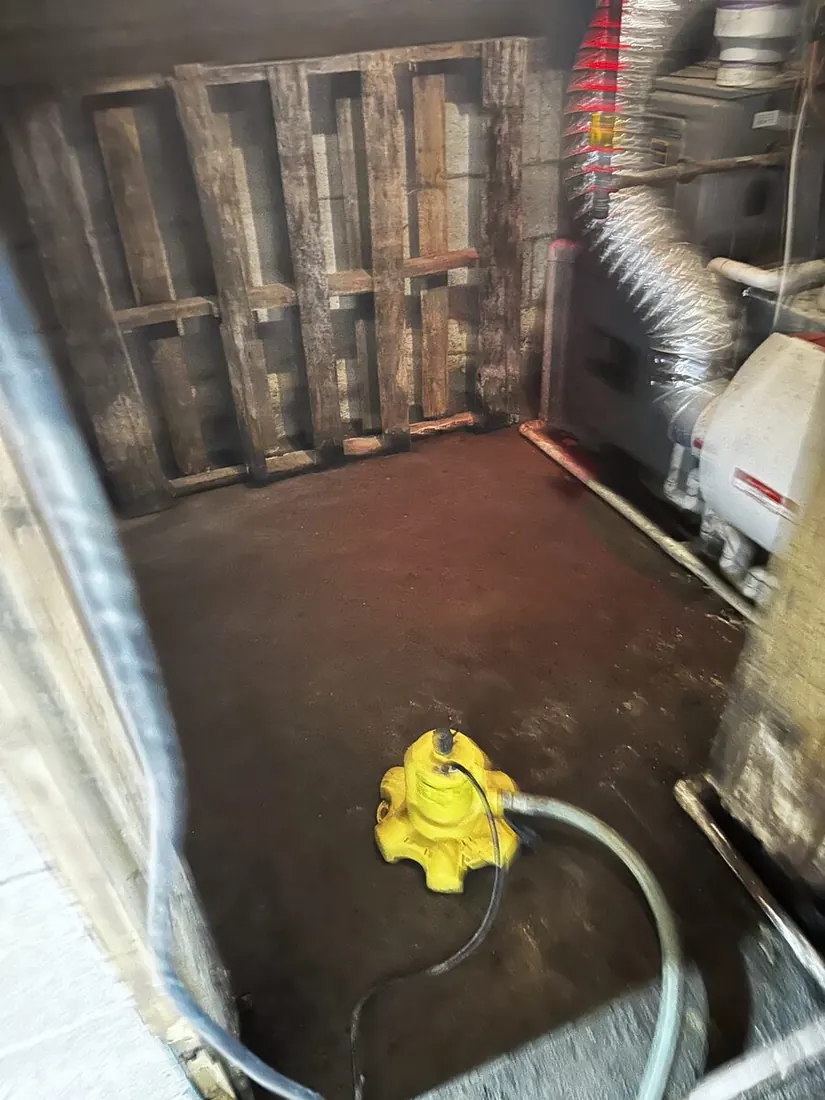
If your sump pump overflows and water reaches the basement floor, treat electrical safety first, confirm whether water is still coming in, and get drying started fast. Pumping the water out does not dry the carpet, drywall or framing it already soaked, those need separate attention. An overflow is not automatically an emergency while water stays inside the pit; it becomes one the moment it crosses onto the floor near outlets, cords and appliances.
Homeowners often assume the motor burned out. It is one of several possibilities, and guessing wrong wastes time:
| What you observe | What it may mean |
|---|---|
| Pit full, pump silent | Power loss, a tripped circuit, or a stuck float, not necessarily a dead motor. |
| Pump humming, water not dropping | A blocked or frozen discharge line, or a mechanical fault, a running motor does not prove water is leaving. |
| Pump running, basin still rising | Inflow is simply exceeding the system's capacity in the storm. |
| Water at the wall or floor drain, pit calm | The water may not be a sump problem at all. See where basement water really comes from. |
This is the distinction most overflow advice blurs. Correcting the source, the pump, power, discharge or drainage, is the property owner's responsibility and typically a plumber's or drainage specialist's work. Restoring the damage, the water in your floors, walls and belongings, is water-damage restoration. The ANSI/IICRC S500 standard treats these as separate responsibilities, and so should you: a new pump the same afternoon does nothing for the saturated carpet pad underfoot.
Not necessarily, and not necessarily clean. Groundwater that overflowed a pit is different from water that came up a floor drain, which may be wastewater. Appearance will not tell you, and a storm does not automatically make water the worst category. If there is any sign of sewage or a floor-drain backup, treat it as contaminated water until assessed. More on that in is sump pump water clean or contaminated.
Extraction pulls out the bulk water. It does not reach the moisture already wicked into carpet padding, the bottom of drywall and the subfloor. That hidden moisture is what grows mold and warps floors, so an overflow cleanup only ends after moisture readings confirm the structure is dry. If you only have an inch or two to clear and want to understand the options, see how to remove basement water after a sump failure.
This guide is general information for US homeowners, not a property-specific diagnosis, a pump-repair manual, a structural or electrical assessment, or insurance advice. Water category, salvage, drying time, cost and coverage depend on your specific situation and policy. MH Restoration provides cleanup and water damage restoration; pump, plumbing, electrical and drainage repairs are separate trades.
Tell us your city, water depth, and whether water is still coming in. We'll walk you through safe next steps and check cleanup availability in your area.
☎ (877) 919-1672 Request Basement Flood Cleanup