Water leaving a sump can look clear, rusty or murky, and none of those appearances tells you whether it is safe or how a restoration professional should classify it. The honest answer is that contamination is determined by where the water came from and what it touched, not by how it looks, and a 2026 clarification from the water-damage standards body makes that point sharper than most online advice admits.
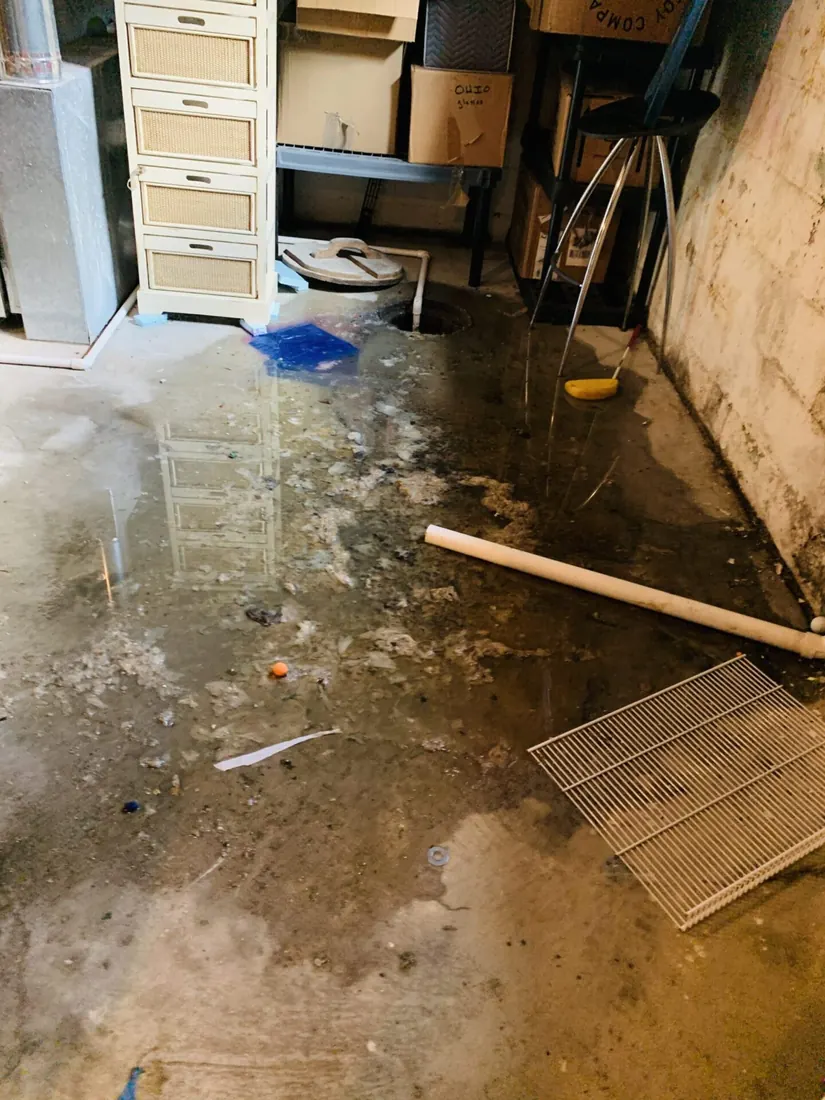
Sump pump water is not automatically clean or automatically contaminated. A typical groundwater sump collects soil water that can carry sediment and dissolved substances and is not drinkable, but it is not sewage either. A sewage-ejector backup or a floor-drain backup is a serious contamination concern. The water's category must be judged from the source and conditions, not from its clarity or from the fact that it rained.
A groundwater sump receives footing-drain water and discharges it away from the foundation. A sewage ejector is a separate system that lifts wastewater from basement fixtures, sometimes including a toilet. They can sit in similar-looking basins in a utility area, but an ordinary groundwater pit is not meant to handle waste. If the basin is sealed or serves a basement bathroom, have a plumber identify it before anyone opens or treats it, because confusing the two leads to badly wrong cleanup decisions.
Many restoration pages state flatly that every storm flood or sump overflow is Category 3 (grossly contaminated) water. In a March 2026 position statement, the ANSI/IICRC S500 Consensus Body clarified that top-down ingress, wind-driven rain and other weather-related water are not automatically Category 3. Contamination has to be determined through inspection and information gathering, not assigned from the weather. That cuts both ways: a storm does not make water the worst category by default, and clear-looking groundwater is not automatically safe. The facts of the specific loss govern.
Two numbers get confused constantly. Category describes contamination (1 clean, 2 significantly contaminated, 3 grossly contaminated). Class describes the drying difficulty, how much material is wet and how hard it will be to dry. A small amount of grossly contaminated water can be a serious cleaning problem but an easy drying job; a large clean-water loss can be a hard drying job with no contamination at all. Treating them as the same thing produces misleading advice about what to remove and how fast to finish.
| Source or condition | What is known | What cannot be assumed |
|---|---|---|
| Foundation groundwater sump | Collected from below grade; may carry sediment | That it is drinkable or sterile |
| Overflow across a dirty floor | Water contacted contaminants on the way | That it stayed Category 1 |
| Floor-drain or ejector backup | Wastewater contamination is likely | That ordinary groundwater cleanup is enough |
| Clear-looking water | Appearance only | That it is safe or a particular category |
Contamination reaching carpet pad, insulation and wall cavities can make ordinary drying and reuse inappropriate; those materials may need removal rather than drying. Where the water is clean, the same materials might be saved. This is why an honest assessment documents the source and the reason for each cleaning or removal decision, and why cleaning and sanitization follows the actual conditions rather than a fixed chemical recipe. If sewage or hazardous water may be involved, contaminated-water cleanup applies.
Ask what evidence supports that determination, which areas were affected, whether wastewater actually entered, and which specific materials require specialist handling. A blanket "every sump overflow is sewage" is not accurate, and neither is downplaying known wastewater because the water looks almost clear. The right answer is specific to your loss.
This guide is general information for US homeowners, not a property-specific diagnosis, a pump-repair manual, a structural or electrical assessment, or insurance advice. Water category, salvage, drying time, cost and coverage depend on your specific situation and policy. MH Restoration provides cleanup and water damage restoration; pump, plumbing, electrical and drainage repairs are separate trades.
Tell us your city, water depth, and whether water is still coming in. We'll walk you through safe next steps and check cleanup availability in your area.
☎ (877) 919-1672 Request Basement Flood Cleanup