It is one of the most disorienting things a homeowner can see: the sump pump is clearly working, you can hear it cycle, and the basement is still taking on water. A running pump is reassuring but it is not proof of protection. The water is getting in faster than it leaves, or it is arriving by a route the pump was never meant to handle.
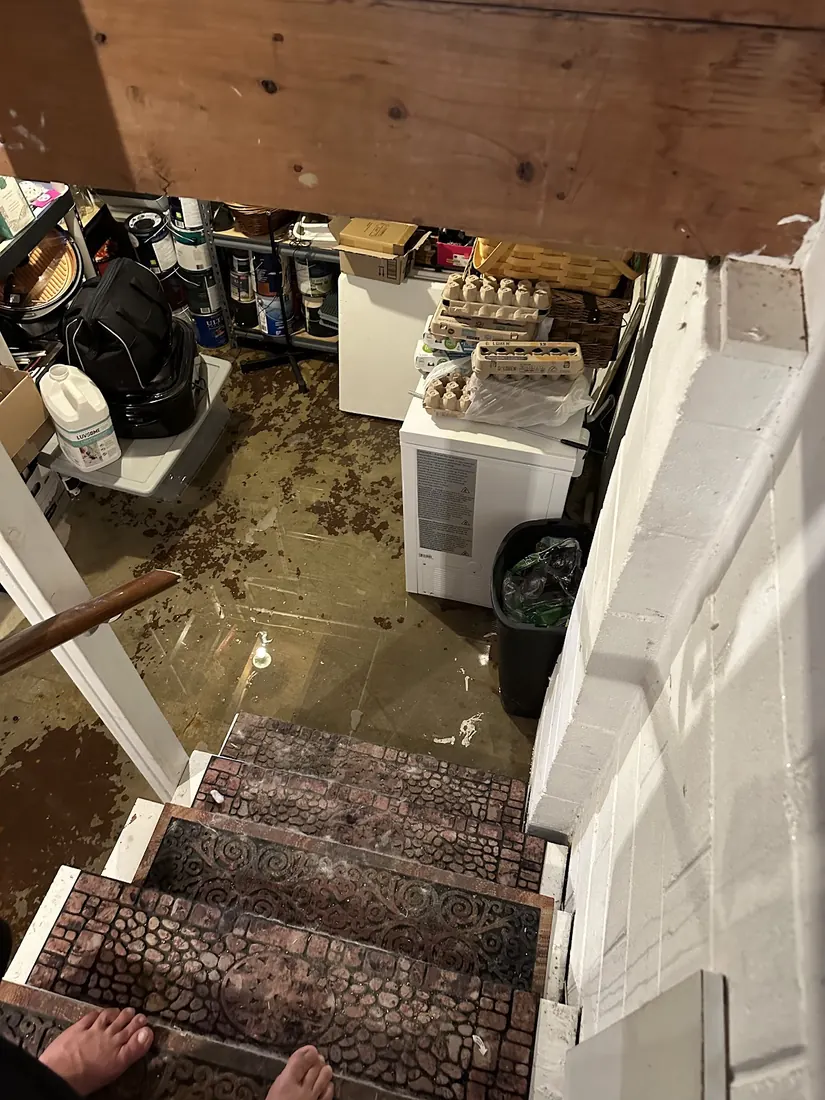
A basement can flood with the sump pump running for three broad reasons: inflow exceeds the pump's effective capacity, the pump runs but water is not actually leaving (a discharge or check-valve problem), or water is entering through a pathway the sump does not serve at all. The fix depends on which, so the first job is diagnosis, not a bigger pump.
During heavy rain or snowmelt on saturated ground, groundwater can reach the basin faster than the pump and its discharge line can clear it. The pump cycles constantly and still loses ground. Effective capacity is governed by vertical lift, discharge pipe length and diameter, fittings and the check valve, not the horsepower on the label. This is covered in depth in why heavy rain overwhelms a sump pump.
A motor you can hear is not the same as water going away. Common culprits:
This is the one homeowners miss. If water appears at the wall-floor joint, through a foundation crack, a window well or a floor drain, the sump pump may be doing its job perfectly while an entirely separate intrusion floods the room. A floor-drain backup in particular may be wastewater, a contamination concern, not a sump issue. Tracing the true entry point is its own task; see where basement water comes from when you have a sump pump.
| Clue | Points toward |
|---|---|
| Pump cycles every few seconds, pit refills instantly | Check-valve drain-back or very high inflow. |
| Water pooling far from the pit | A separate entry pathway or water spreading under flooring. |
| Water at a wall seam during rain | Groundwater seepage or foundation intrusion. |
| Water rising from a floor drain | Possible sewer or drain backup, treat as contaminated until checked. |
Swapping in a larger pump fixes nothing if the real problem is a dead check valve, a recirculating discharge or seepage through the wall. The sensible sequence is to identify the mechanism, often with a pump or drainage specialist, then address it, and separately handle whatever water already reached your materials with a moisture assessment and water-damage restoration. Fixing the cause and restoring the damage are two different trades.
This guide is general information for US homeowners, not a property-specific diagnosis, a pump-repair manual, a structural or electrical assessment, or insurance advice. Water category, salvage, drying time, cost and coverage depend on your specific situation and policy. MH Restoration provides cleanup and water damage restoration; pump, plumbing, electrical and drainage repairs are separate trades.
Tell us your city, water depth, and whether water is still coming in. We'll walk you through safe next steps and check cleanup availability in your area.
☎ (877) 919-1672 Request Basement Flood Cleanup